Austin
Seven, Mini, Mini Moke
1959-2000
The Austin Seven was launched in August 1959 alongside its near-identical Morris Mini-Minor counterpart. Designed by Sir Alec Issigonis, its revolutionary transverse engine and front-wheel-drive layout provided exceptional interior space within a remarkably compact body. Developed partly in response to fuel shortages following the 1956 Suez Crisis, the car offered economical and practical family transport. In 1962 the Seven name was dropped and the model became the Austin Mini. Sales grew strongly during the 1960s, while Hydrolastic suspension arrived in 1964. The sporting Austin Mini Cooper, developed with John Cooper, joined the range in 1961, featuring increased power, twin carburettors and front disc brakes. The more powerful Cooper S followed, achieving considerable success in international rallying and helping turn the Mini into a worldwide icon.
See also: Innocenti Mini / Morris Mini-Minor, 850, Mini, Mini Moke / Riley Elf
1959

Austin Seven
folder, 12 pages, Dutch
published c1959
Dating
the car is presented as a new model
publicity code P 6015 A

Austin Seven
folder, 8 pages, Dutch
published c1959
Dating
the car is presented as a new model
publicity code P 6063 A
1961

Austin Seven
folder, 12 pages, Dutch
published c1961
Dating
as of April 1961 the new all-steel countryman was available for export markets; in the folder it is described as new, as of October 1961 the countryman fuel filler is located on the right hand side
publicity code 2162

Austin Seven
folder, 8 pages, Dutch
published c1961
Dating
as of October 1961 the countryman fuel filler is located on the right hand side
1962

Austin Mini Countryman
folder, 8 pages, English
published c1962
Dating
publicity code 2181
1964

Austin Mini-Cooper
folder, 6 pages, English
published c1964
Dating
the January 1964 Monte Carlo Rallye win is mentioned, the 1965 win is not
publicity code 2284
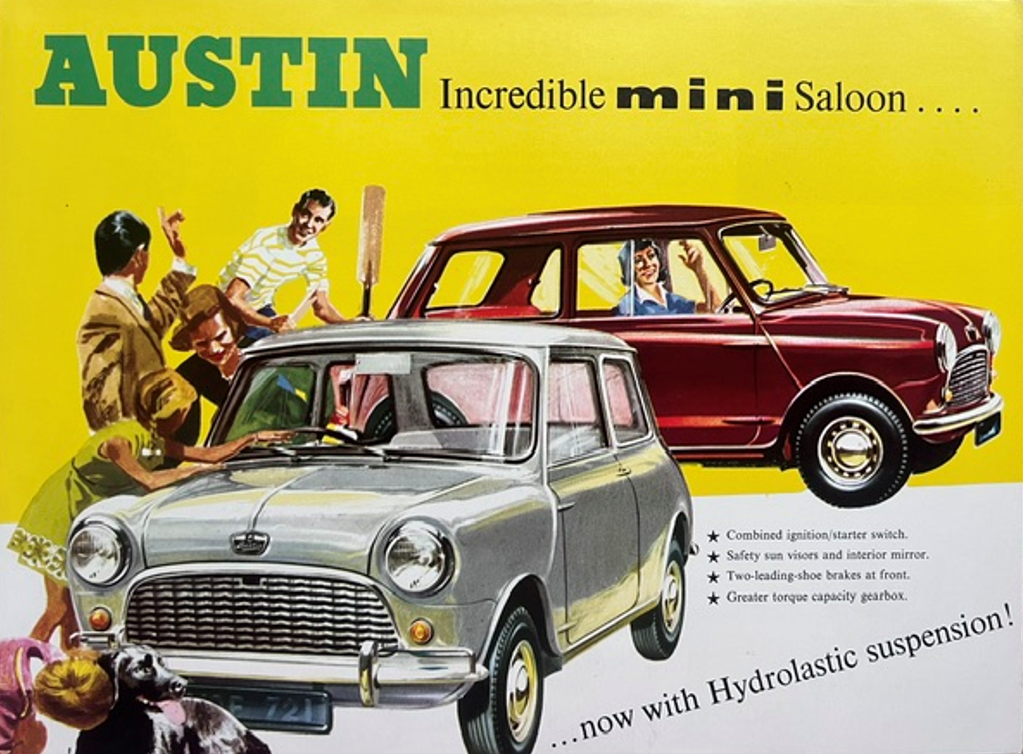
Austin Mini
folder, 8 pages, English
published c1964
Dating
hydrolastic suspension was introduced in 1964, it is presented as a novelty
publicity code 2286/G
1966
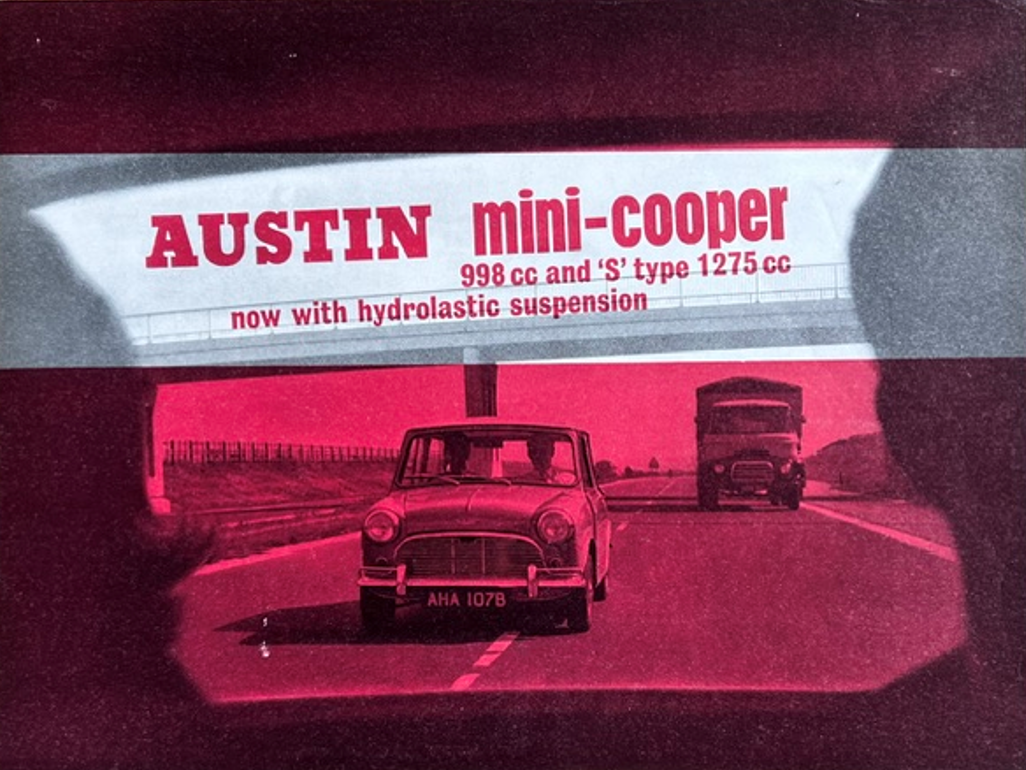
Austin Mini-Cooper
folder, 6 pages, English
published c1966
Dating
the January 1966 Monte Carlo rallye is mentioned, the January 1967 Monte Carlo rallye win is not
publicty code 2284/H
The Austin Mini Mk II appeared in 1967 with subtle styling and equipment revisions while retaining the successful basic design. The most recognizable changes were a redesigned front grille, larger rear window and revised rear lights. Cooper and more powerful Cooper S versions continued, combining uprated engines, twin carburettors and front disc brakes with the Mini’s famously agile handling. The Mk II had a short career: in 1969 British Leyland discontinued the separate Austin and Morris identities, with the car subsequently marketed simply under the Mini name.
1967
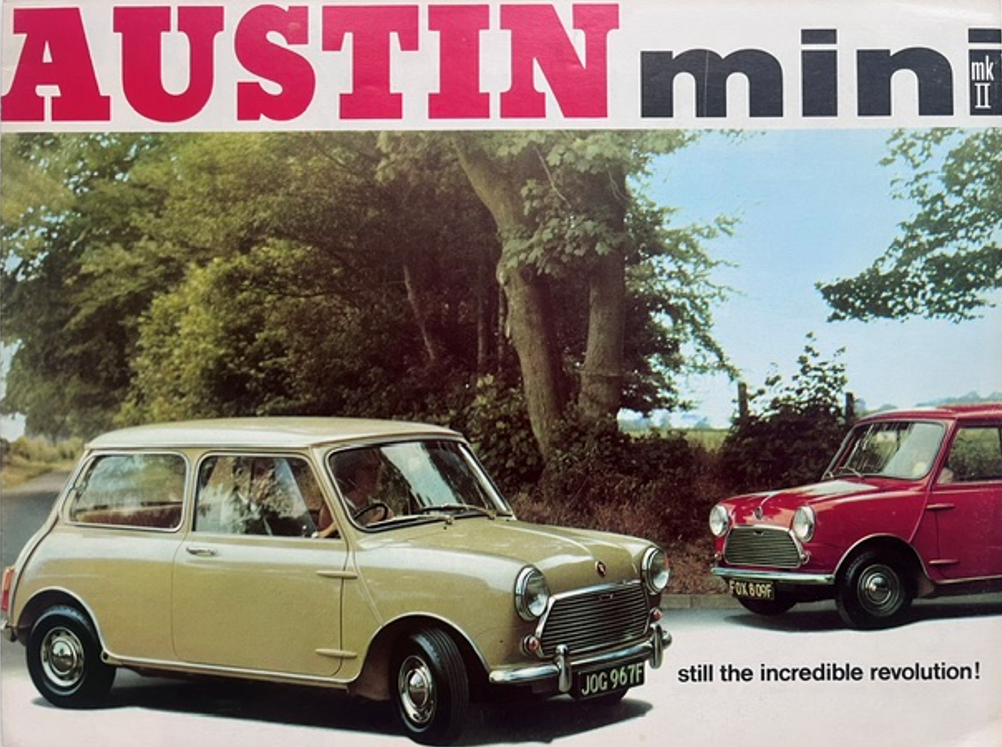
Austin Mini Mk II
folder, 8 pages, English
published 10-67
Dating
publicity code
23/108 10/67 (9753) - 50m
2438/A
1969
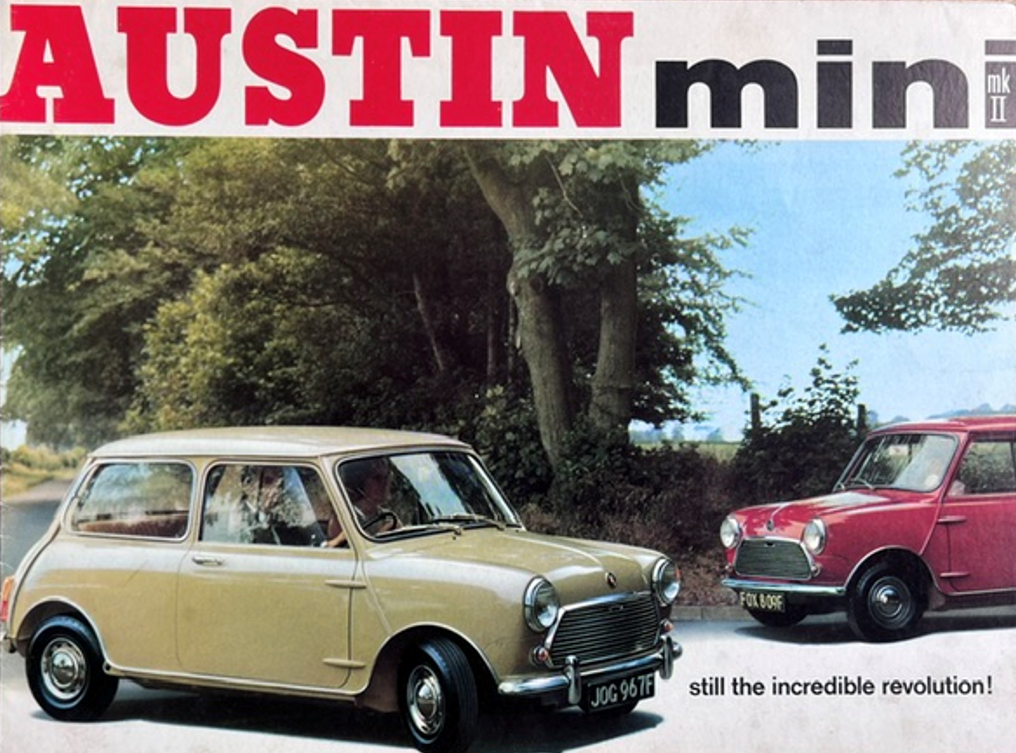
Austin Mini Mk II
folder, 8 pages, English
published 01-69
Dating
publicity code
23/108 (20123) 1/69 - 50m
2438/D
The Mini Mk III arrived in late 1969, now marketed simply as Mini rather than separately as an Austin or Morris. Major changes included larger doors with concealed hinges and wind-up windows, replacing the distinctive external hinges and sliding windows. Hydrolastic suspension was replaced by the simpler original-style rubber cone system. Alongside the traditional Mini, British Leyland launched the more modern Mini Clubman, distinguished by its squared-off front end and revised interior. Intended eventually to replace the original design, the Clubman instead remained alongside it throughout the 1970s.
1969

Mini
brochure, 12 pages, Dutch
published c1969
Dating
all the Mark III changes are presented as new

Austin Mini Clubman
folder, 8 pages, Dutch
published c1969
Dating
the Clubman was introduced in 1969, this is an introductory folder
publicity code 2705

Mini Clubman
folder, 8 pages, Dutch
published c1969
Dating
the Clubman was introduced in 1969, this is an introductory folder
publicity code 2705

Austin Mini 1275 GT
folder, 4 pages, Dutch
published c1969
Dating
the 1275 GT was introduced in 1969, this is an introductory folder
publicity code 2706
1970

Austin Mini
folder, 8 pages, Dutch
published 01-70
Dating
publicity code
23/185 (29285) 1/70 - 250m

Mini
folder, 8 pages, Dutch
published 01-70
Dating
publicity code
23/185 (29285) 1/70 - 250m
1975

Mini 850
folder, 8 pages, Dutch
published c1975
Dating
publicity code LI 64

Mini 1000
folder, 8 pages, Dutch
published c1975
Dating
publicity code LI 65

Mini Clubman
folder, 8 pages, Dutch
published c1975
Dating
publicity code LI 66
1976

Mini 1100 special
brochure, 12 pages, Dutch
published c1976
Dating
the 1100 special was introduced in 1976 and is presented as new in the brochure
publicity code BLI 79

Mini 1000
brochure, 16 pages, Dutch
published c1976
Dating
in 1976 the pedals were enlarged, this is mentioned in the brochure
publicity code BL 88

Mini 850
folder, 4 pages, Dutch (Belgium)
published c1976
Dating
in 1976 the pedals were enlarged, this is mentioned in the folder
publicity code LI 89

Mini clubman estate
folder, 4 pages, Dutch
published c1976
Dating
in 1976 the pedals were enlarged, this is mentioned in the folder
publicity code LI 91
1977

Mini 1100 special
folder, 4 pages, Dutch
published c1977
Dating
publicity code LI 93
1978

Mini
brochure, 22 pages, Dutch (Belgium)
published c1978
Dating
the 1,098 cc Clubman engine was introduced in 1975 and lasted until 1980
Mini Moke
1963-1968
The Mini Moke was conceived by BMC as a lightweight military vehicle using the Mini’s front-wheel-drive mechanical components. Designed by Sir Alec Issigonis and John Sheppard, its simple, doorless body was intended to provide an inexpensive, easily transportable alternative to vehicles such as the Land Rover. However, prototypes proved unsuitable for military use due to limited ground clearance and modest power. BMC subsequently developed the Moke for civilian use, initially targeting farmers and light commercial users. It later became particularly popular as a recreational and leisure vehicle.
1963
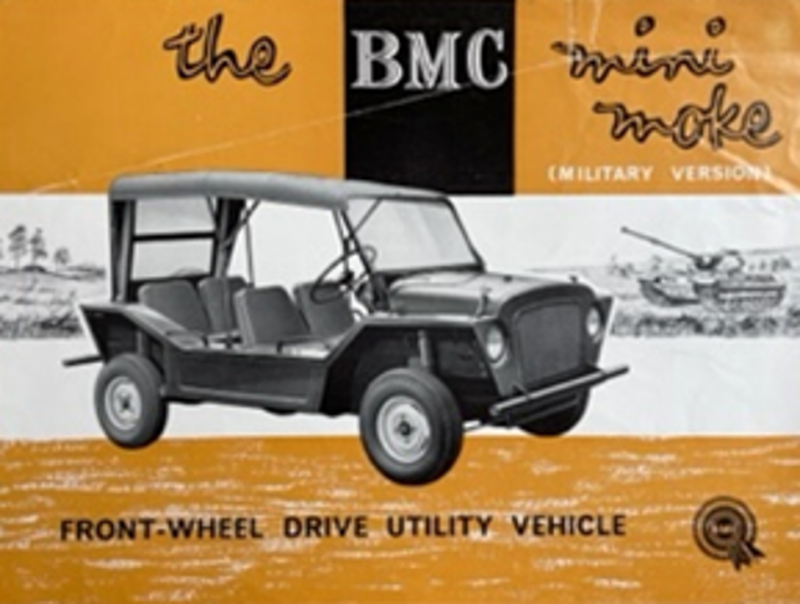
BMC Mini Moke
sheet, Engels
uitgave c1963
Datering
het gaat om de military version, die was aan de orde voor de civiele versie in 1964 op de markt kwam
Maak jouw eigen website met JouwWeb