Saab
95, 96
1959-1979
The Saab 95 estate debuted in 1959, followed a year later by the Saab 96 saloon, which replaced the Saab 93. Sharing the same mechanical basis, the two models featured Saab’s distinctive aerodynamic styling, front-wheel drive and a lively 841 cc three-cylinder two-stroke engine. The practical 95 stood out with its rear-facing folding third-row seat, making it one of the few compact seven-seaters of its era. Both models used Saab’s characteristic freewheel system to protect the two-stroke engine during overrun, while the 95 even gained a four-speed gearbox before the 96, making it popular in rallying. Sport and Monte Carlo versions with triple carburettors further enhanced Saab’s growing reputation in international motorsport.
1961

Saab 96
folder, 4 pages, Dutch
published c1961
Dating
this is the first series model 96 (1960-1963); since the 1963 brochures are dated, this would be published between 1960-1962
1962

Saab 96
sheet, Dutch
published c1962
Dating
this is the first series model 96 (1960-1963); since the 1963 brochures are dated, the English version of this sheet is dated 10-62

Saab 96
brochure, 8 pages, Dutch
published c1962
Dating
this is the first series model 96 (1960-1963); since the 1963 brochures are dated, this would be published between 1960-1962
1963

Saab 96
brochure, 8 pages, German
published 08-63
Dating
brochure code B 50222 30.000 8.63

Saab 95
brochure, 8 pages, English
published 08-63
Dating
brochure code B 50228 50.000 8.63
The 1965 model year brought a longer front end to both the 95 and 96, allowing the radiator to be relocated ahead of the engine. Performance of the two-stroke engine was gradually improved, while larger windows arrived for 1968. The biggest step came in 1967 with the introduction of the smooth Ford-sourced 1.5-litre V4 engine, although the traditional two-stroke remained available until the end of 1968.
1964

Saab 96
folder, 8 pages, Dutch
published 1964
Dating
folder code AB 64
1965

Saab 96
brochure, 8 pages, Dutch
published 1965
Dating
on page 2 1965 is printed

Saab 96, 95
folder, 12 pages, Dutch
published 1965
Dating
in the text Saab 1965 is mentioned
1966

Saab 96, 95
brochure, 14 pages, Dutch
published c1966
Dating
in 1967 the engine is enlarged to 1,498 cc, in this folder the original 841 cc engine is described

Saab 96, 95
folder, 8 pages, Dutch
published c1966
Dating
n 1967 the engine is enlarged to 1,498 cc, in this folder the original 841 cc engine is described

Saab 96, 95 special
folder, 4 pages, Dutch
published c1966
Dating
folder code dB 1-66-4

Saab 96, 95
folder, 8 pages, Dutch
published 09-66
Dating
folder code F 30.078 24.000 9.66
1967

Saab 96, 95 V4
folder, 4 pages, Dutch
published c1967
Dating
this is an introduction folder to the new 1967 V4 engine
From the 1969 model year onwards, both the Saab 95 and 96 were sold exclusively with the V4 engine and received a redesigned front end with larger rectangular headlights. Later updates included improved interiors and, from 1975, impact-absorbing bumpers. The 95 lost its rear-facing third-row seat in 1976 and ended production in 1978, while the 96 continued until 1980. Both models earned an enduring reputation for durability, practicality and rally success.
1969

Saab 96, 95 V4
brochure, 12 pages, Dutch
published 1969
Dating
1969 is printed on the cover

Saab 96 V4
folder, 4 pages, Dutch
published 1969
Dating
1969 is printed on the cover
1971

Saab 95, 96
brochure, 20 pages, Dutch
published 1971
Dating
1971 is printed on the cover
1974

Saab 96, 95 V4
brochure, 16 pages, Dutch
published 1974
Dating
on the back cover it says printed in Sweden 74
1975
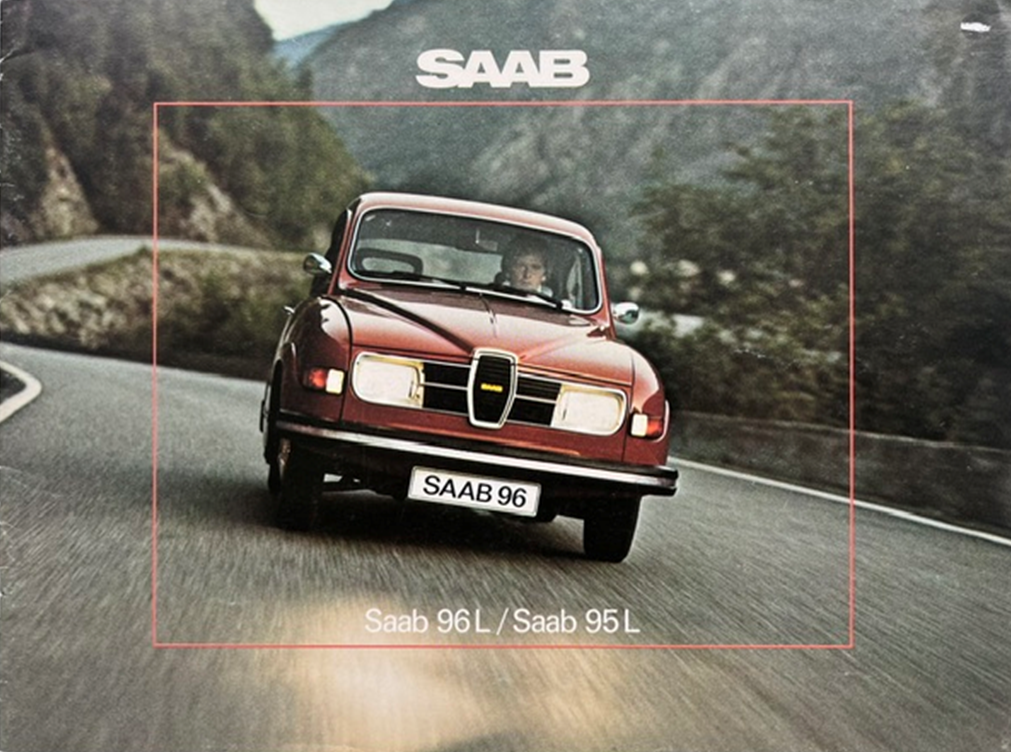
Saab 96, 95
brochure, 16 pages, English
published 1975
Dating
on the back cover it says printed in Sweden 1975
1979

Saab 96 GL
brochure, 12 pages, Dutch
published 1979
Dating
on the back cover 1979 is printed
Maak jouw eigen website met JouwWeb