Opel
Olympia Rekord, Rekord, Ranger
1953-1986
In March 1953, the pre-war Opel Olympia was replaced by the Opel Olympia Rekord. Innovations included a modern ponton body, incorporating styling features from the United States that had annual facelifts as well as exterior and interior trim changes. The 1,488 cc four-cylinder, water-cooled engine however, had changed little since it was introduced in the 1937 Opel Olympia. Starting in August 1953, Opel offered a two-door convertible, which found few customers and was discontinued in July 1956. Also available in August 1953 was a three-door stationwagon, which Opel branded as the CarAVan. The car initially featured an open-mouthed front grill which reminded commentators of a shark's mouth. The Opel Olympia Rekord was superseded in August 1957 by the new, larger, and more highly styled Rekord P1, which was available in a four-door body style for the first time.
1953

Opel Olympia Rekord
brochure, 12 pages, German
published c1953
Dating
in 1954 the front grille was modified, incorporating a horizontal bar

Opel Olympia Rekord
folder, 12 pages, Dutch
published 05-53
Dating
publicity code J1152-N 150003-5-5 VDR
1954

Opel Olympia
folder, 6 pages, German
published c1954
Dating
in 1954 the grille received a horizontal bar; late 1955 the grille was changed again

Opel Caravan
folder, 4 pages, German
published c1954
Dating
in 1954 the grille received a horizontal bar; late 1955 the grille was changed again
1955

Opel Olympia
brochure, 12 pages, German
published c1955
Dating
the car has the 1955 grille which was changed again in 1956

Opel Rekord
folder, 6 pages, Dutch
published 09-55
Dating
publicity code J 1449-N 100.0005-9-30

Opel Rekord caravan
brochure, 8 pages, Dutch
published 09-55
Dating
publicity code J 1451-N 18000 5-9-30
1956

Opel Olympia
folder, 6 pages, German
published 08-56
Dating
publicity code OO 6-568

Opel Rekord
folder, 6 pages, Dutch
published 08-56
Dating
publicity code J1583-N/Fl 2005006-8-31

Opel Caravan
folder, 6 pages, Dutch
published 08-56
Dating
publicity code J1583-N/Fl 234006-8-31
Introduced in 1957, the Opel Rekord P1 brought American-inspired styling to the German family car market with its distinctive panoramic windscreen and wrap-around rear window. Under the bonnet was a 1.5-litre four-cylinder engine that was later upgraded from 45 to 50 hp. A larger 1.7-litre engine became available in 1959, improving performance still further. The Rekord P1 was offered as a two- and four-door saloon, estate, delivery van and in very small numbers as a coupé and cabriolet. Comfortable, reliable and attractively styled, it became one of West Germany’s most successful cars of the late 1950s, consistently ranking second in sales only to the Volkswagen Beetle. Production continued until 1960, although the basic Opel 1200 version remained available until 1962.
1957

Opel Rekord
folder, 4 pages, German
published 08-57
Dating
publicity code ORC 4-578

Opel Rekord
folder, 6 pages, Dutch
published 10-57
Dating
publicity code
J1764 FI/N 1470007-10-21
1958

Opel Rekord caravan
folder, 6 pages, Dutch
published 08-58
Dating
publicity code J1883-FL/N 179008-8-30
1959

Opel Rekord
brochure, 12 pages, Dutch
published 04-59
Dating
publicity code J2003-F/N280009-4-30
1960

Opel Rekord
brochure, 12 pages, Dutch
published 02-60
Dating
publicity code
J 2115-FI/N 590000-2-26Bl
1961

Opel 1200
brochure, 8 pages, Dutch
published 06-61
Dating
publicity code J 2228-FI/N 184001-6-16
In the summer of 1960, the Rekord P2 was introduced as the successor to the Rekord P1. It kept the same wheelbase but was slightly longer and wider. A major change was the introduction of a factory-built coupé. The earlier P1 coupé had been a costly conversion by an outside coachbuilder, but Opel’s in-house production made the P2 coupé far more affordable and successful. Still, the best-seller remained the saloon, offered with two or four doors. Despite its success, it was replaced in early 1963 after just 30 months by the Rekord A. Stylistically, the P2 was cleaner and less “American-looking” than its predecessor, with a wider grille and minimal tail fins. The removal of the panoramic screen allowed for wider front doors and easier access.
1962

Opel Rekord Coupé
folder, 6 pages, Dutch
published 01-62
Dating
publicity code J 2288 F/N 80002-1-30

Opel Rekord
brochure, 12 pages, Dutch
published 10-62
Dating
publicity code J 2357 F/N 276002-10-31
Introduced in March 1963, the Opel Rekord A replaced the P2 with a totally new, sleek and modern body. Beneath the fresh design, however, was a familiar engine whose origins dated back to the 1937 Opel Olympia. Although the Olympia name had officially disappeared, a chrome “Olympia” script remained on the glovebox lid. Available in numerous body styles and even with a six-cylinder engine from 1964, the Rekord A proved a major success, with nearly 890,000 units built in just over two years.
1963

Opel Rekord
folder, 12 pages, Dutch
published 04-63
Dating
publicity code J 2417 N 25000 3-4-15

Opel Rekord caravan
folder, 6 pages, Dutch
published 07-63

Opel Rekord
brochure, 12 pages, Dutch
published 11-63
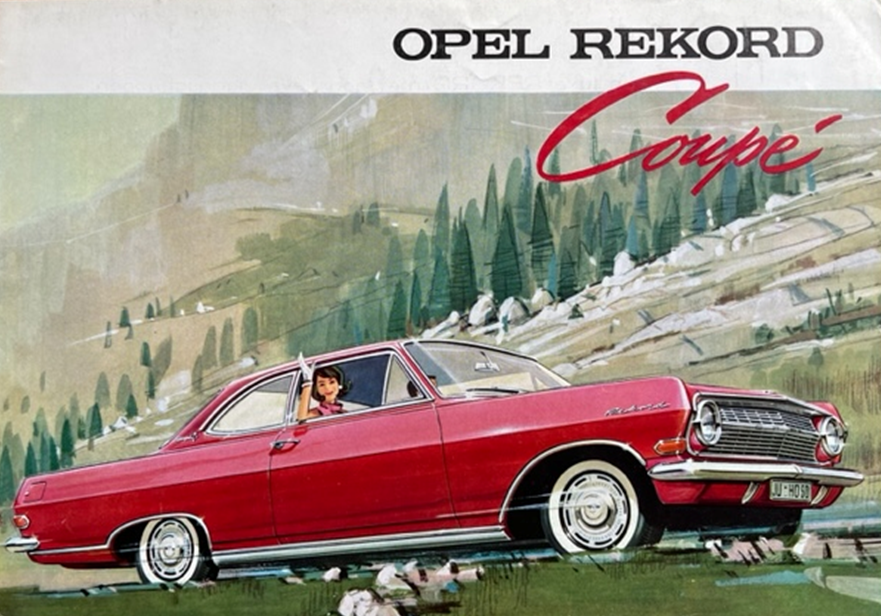
Opel Rekord coupé
brochure, 8 pages, Dutch
published 12-63
Dating
brochure code J 2483 D 190003-12-15
1964

Opel Rekord
folder, 4 pages, Dutch
published c1964
Dating
in March 1964, a six-cylinder version was introduced; it is not mentioned in the folder

Opel Rekord
brochure, 12 pages, Dutch
published c1964
Dating
the Belgian brochure is dated 04-64, see https://archives-catalogues-automobiles.fr/laurentbunnik/opere101.html
1965

Opel Rekord coupé
brochure, 8 pages, Dutch
published 06-65
Dating
publicity code J 2607 F/N 66005-6-28
Introduced in August 1965, the Opel Rekord B was a short-lived transitional model between the Rekord A and the delayed Rekord C. Its body was lightly restyled with modern rectangular headlights and new rear panels, but its main innovation was Opel’s new cam-in-head four-cylinder engine range. Produced for only around ten months, the Rekord B nevertheless sold strongly, with nearly 300,000 units built.
1966

Opel Rekord
folder, 4 pages, Dutch
published 01-66
Dating
folder code J 2658 D 400006-1-31
Introduced in August 1966, the Opel Rekord C replaced the short-lived Rekord B with an all-new body featuring the distinctive “coke bottle” styling that became one of the car’s trademarks. It retained Opel’s modern four-cylinder engines, while six-cylinder versions were briefly offered before being superseded by the new Commodore. Available as a saloon, estate, van and stylish pillarless coupé, the Rekord C combined modern engineering with excellent comfort and safety. Its enormous popularity made it the first Rekord to surpass one million units, with over 1.27 million cars built between 1966 and 1971, making it one of Opel’s greatest commercial successes.
1966

Opel Rekord
folder, 4 pages, Dutch
published 10-66
Dating
folder code J 2703 F/N 550006-10-15
1967

Opel Rekord coupé
folder, 4 pages, Dutch
published 12-67
Dating
folder code J 2773 F/N 395007-29-12
1968

Opel Rekord
folder, 4 pages, Dutch
published 01-68
Dating
folder code J 2771 F/N 112008-1-10

Opel Rekord caravan
folder, 4 pages, Dutch
published 01-68
Dating
folder code J 2772 F/N 535008-1-10
1969

Opel Rekord caravan
folder, 4 pages, Dutch
published 10-69
Dating
folder code J 2815 F/N 540009-10-1

Opel Rekord
brochure, 20+2 pages, Dutch
published 12-69
1970

Opel Rekord
brochure, 20 pages, Dutch
published 10-70

Opel Rekord
folder, 4 pages, Dutch
published 11-70
Dating
folder code J 2932 F/N 1000000-11-15

Opel Rekord caravan
folder, 4 pages, Dutch
published 11-70
Dating
folder code J 2937 F/D 55000 70-11-16
1971

Opel Rekord
sheet, German
published c1971
Dating
the 1.5 litre engine was discontinued in 1970, it is not mentioned in the sheet
Introduced at the beginning of 1972, the Opel Rekord D featured an all-new body with cleaner, more European styling while retaining the proven petrol engines from its predecessor. In 1972 Opel also introduced its first diesel-powered Rekord, aimed primarily at the lucrative taxi market. Available as a saloon, estate and coupé, the Rekord D combined comfort, reliability and strong value for money. During its 5½-year production run it became the second Rekord to surpass one million units, with more than 1.1 million cars built before being replaced by the Rekord E in 1977.
1972

Opel Rekord II
brochure, 16 pages, Dutch (Belgium)
published 01-72

Opel Rekord II
folder, 6 pages, Dutch
published 01-72
Dating
folder code J 2978 FL/D 800002-1-17

Opel Rekord 2100 D
folder, 4 pages, Dutch
published 10-72

Opel Rekord II
brochure, 10 pages, Dutch
published c1972
Dating
until early 1973 the car was named Rekord II as in this brochure; the diesel engine was introduced in September 1972 and is mentioned in the brochure
1973

Opel Rekord II
brochure, 16+4 pages, Dutch
published 01-73
Dating
code J 3027 FL/D 7500073-15-1
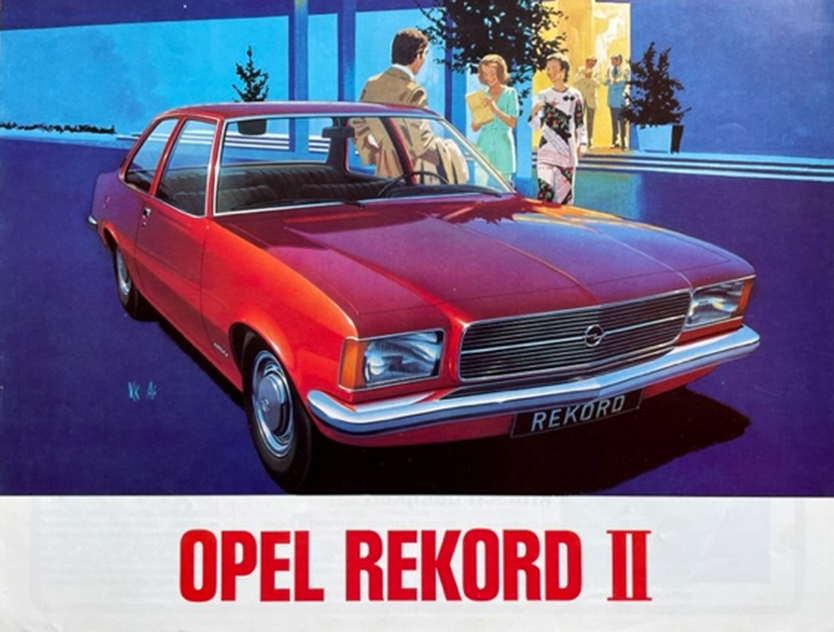
Opel Rekord II
folder, 6 pages, Dutch
published 01-73
Dating
folder code J 3028 FL/D 9000073-1-30

Opel Rekord
brochure, 16+4 pages, Dutch
published 10-73
Dating
code J 3046 Fl/D 10000073-10-30
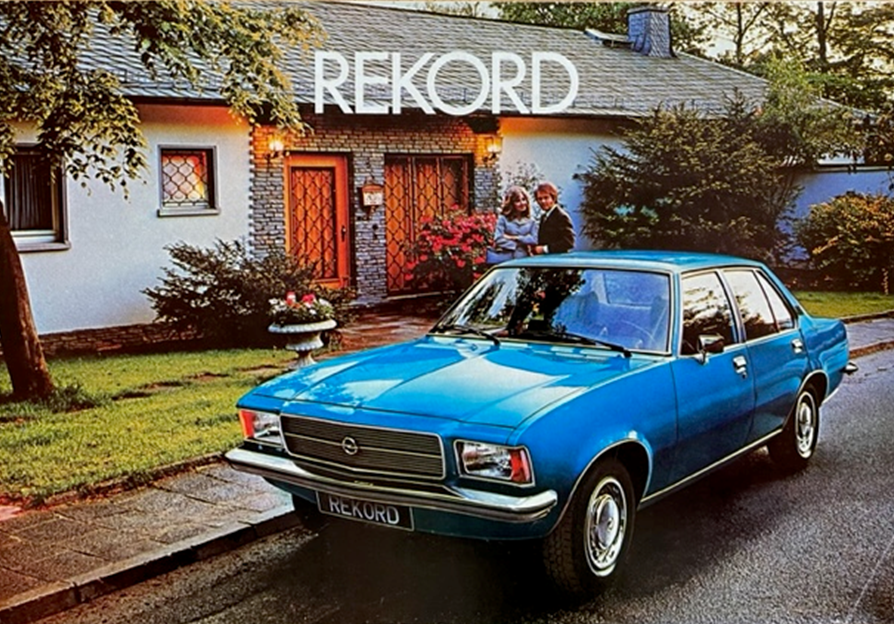
Opel Rekord
folder, 6 pages, Dutch
published c1973
Dating
the Belgian brochure has code
J 3046 FL/D 1000073-10-30

Opel Rekord 2100 D
folder, 4 pages, Dutch
published 09-73
1974

Opel Rekord taxi
brochure, 8 pages, Dutch
published 06-74
Dating
code J 3070 F/D 13000 74-6-24

Opel Rekord
brochure, 16 pages, Dutch
published 10-74

Opel Rekord
folder, 4 pages, Dutch
published 12-74
1977

Opel Rekord
brochure, 20+2 pages, Dutch
published 01-77
Dating
brochure code 80.000/1-77/W

Opel Rekord
folder, 4 pages, Dutch
published 02-77
Dating
folder code 100.000/2-77/W

Opel Rekord 2100 D
folder, 4 pages, Dutch
published 02-77
Dating
folder code 50.000/2-77/W
Ranger
1968-1978
The Ranger name first appeared in South Africa in 1968, where General Motors marketed it as “South Africa’s Own Car”. Its European career began in 1970, with production in Antwerp, Belgium, and Biel-Bienne, Switzerland; a few were also sold in the Netherlands. The Ranger A combined an Opel Rekord-based body and Opel engines with styling elements reminiscent of contemporary Vauxhalls. In 1971 the Ranger B followed, closely related to the Opel Rekord D but identifiable by its twin headlights, distinctive grille and revised rear. The range included saloons and coupés, culminating in the 140 hp 2800 GTS coupé. Swiss production ceased in 1975, while Belgian manufacture continued until 1978, when GM abandoned the increasingly redundant Ranger marque.
1970
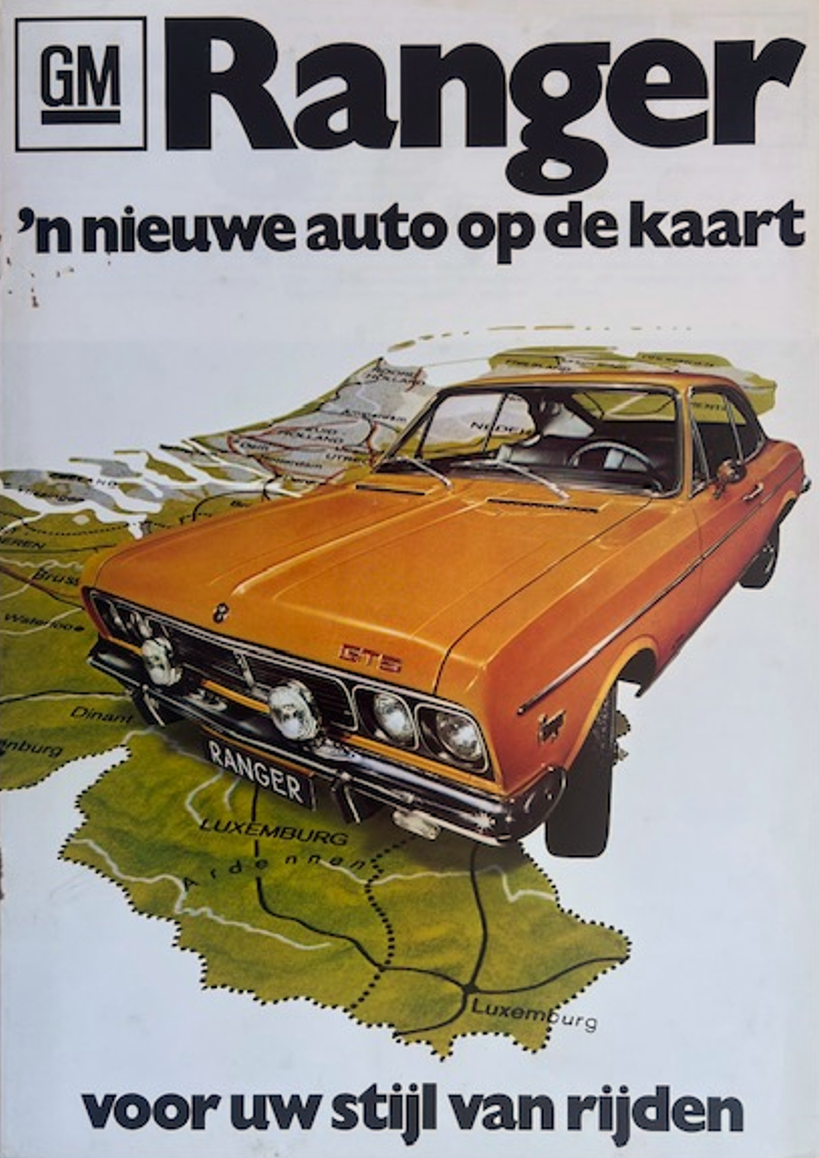
Ranger 1700, 1900, 2500
brochure, 8 pages, Dutch
published c1970
Dating
it is presented as a new car
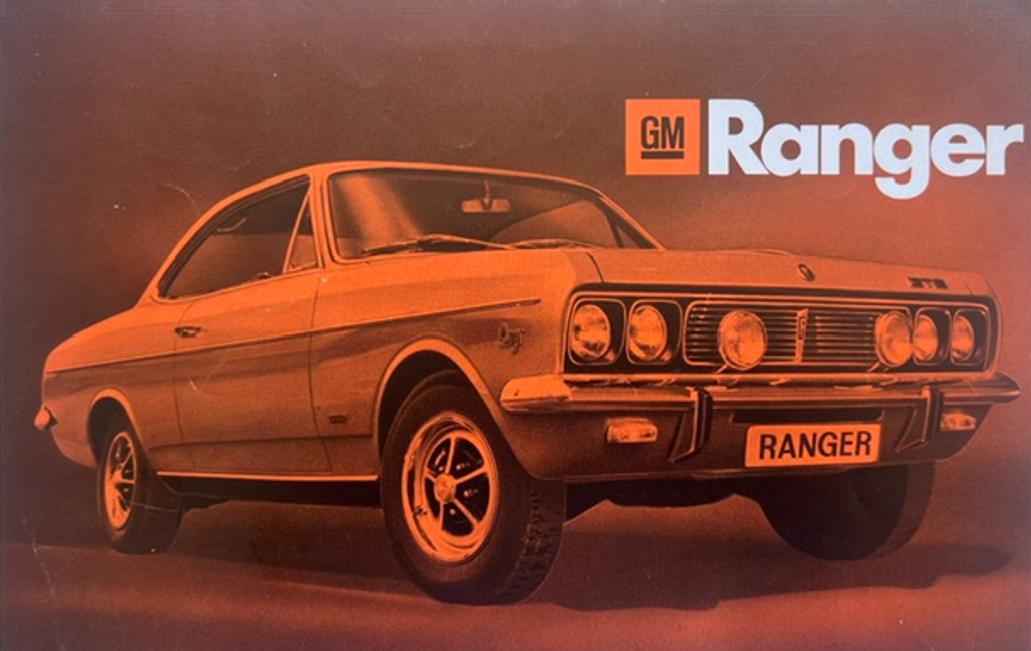
Ranger 1700, 1900, 2500
folder, 14 pages, Dutch
published 09-70
Dating
publicity code J 2921 F/D-9600070-9-15
1971
Ranger 1700, 1900, 2500
brochure, 20+4 pages, Dutch
published 01-71
Datring
publicity code J 2950-F/N 550001-1-15
1972

Ranger 1700, 1900, 2500
folder, 4 pages, Dutch
published 04-72
Dating
folder code J 2991 FL/D 56000 72-4-16
Ranger 1700, 1900, 2500
brochure, 24+4 pages, Dutch
published 05-72
Dating
May 1972 is printed inside the appendix
1977
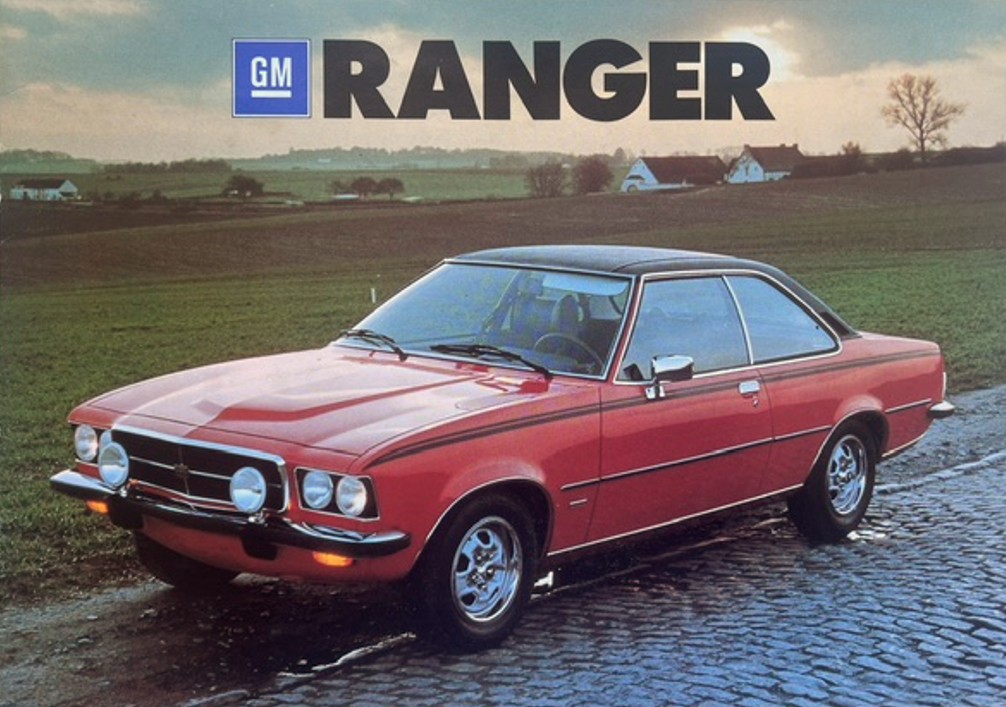
Ranger 1700, 1900, 2500, 2800
brochure, 8 pages, Dutch
published 01-77
Dating
publicity code 771/SD
Maak jouw eigen website met JouwWeb