Humber
Super Snipe
1938-1967
The Super Snipe was introduced in October 1938, derived by combining the four-litre inline six-cylinder engine from the larger Humber Pullman with the chassis and body of the Humber Snipe, normally powered by a three-litre engine. The result was a car of enhanced performance and a top speed of 127 km/h which was fast for its day. Within a year of introduction, World War II broke out in Europe but the car continued in production as a British military staff car, while the same chassis was used for an armoured reconnaissance vehicle, the Humber Light Reconnaissance Car.
Following the Second World War, Humber resumed production of the Super Snipe in 1946. Initially based on pre-war designs, the model evolved rapidly through the Mark I, II and III generations. Powered by a smooth 4.1-litre six-cylinder engine, the Super Snipe offered spacious six-passenger accommodation and became one of Britain's leading executive cars. The Mark II of 1948 introduced an all-new body and chassis, while the Mark III of 1950 brought suspension improvements and distinctive rear-wheel spats.
Introduced in 1952, the Humber Super Snipe Mark IV featured an all-new body shared with the Humber Hawk but stretched to accommodate a powerful 4.1-litre overhead-valve six-cylinder engine. Offering impressive performance, comfort and refinement, it became one of Britain's leading executive cars of the 1950s. Overdrive became available in 1955, followed by an automatic transmission in 1956.
1954
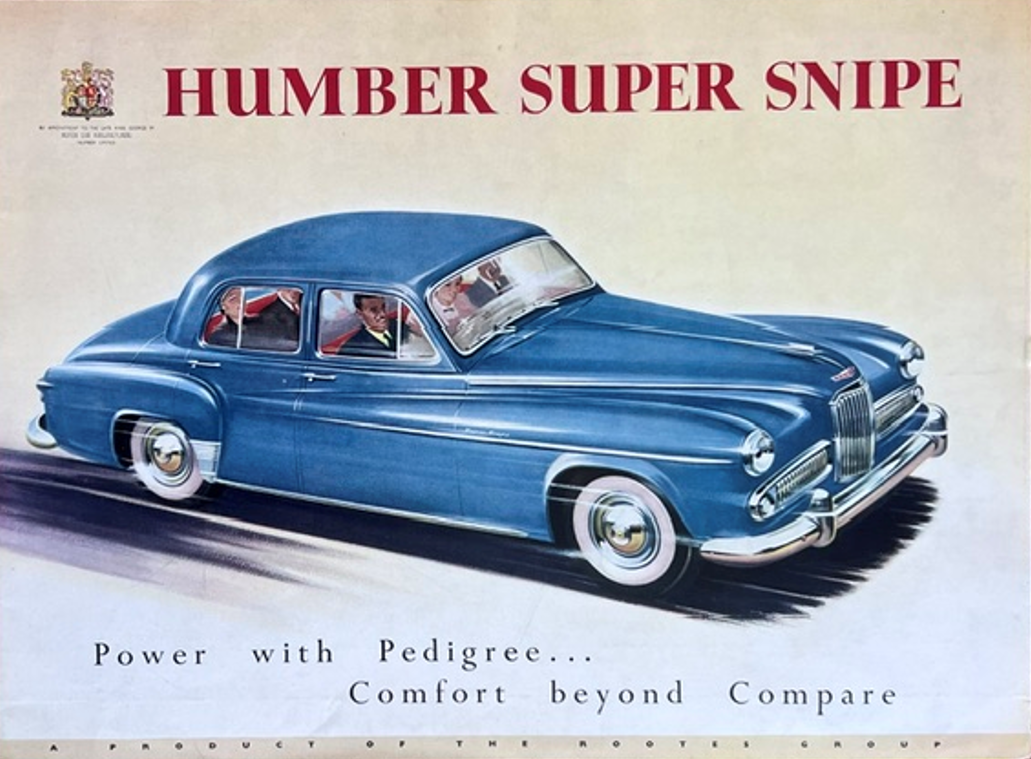
Humber Super Snipe
folder, 8 pages, English
published 09-54
Dating
publicity code 5022/EX/94/5
Presented at the Paris Motor Show in October 1958, the all-new Humber Super Snipe marked a complete break from its predecessor. Based on the modern unitary body of the Humber Hawk, it featured a newly developed 2.6-litre six-cylinder engine producing 112 bhp, with optional overdrive, automatic transmission and power steering. A touring limousine version was also available. The Series II followed in October 1959 with a larger 3.0-litre engine developing 129 bhp, front disc brakes and improved suspension, making the Super Snipe faster, more refined and better suited to long-distance touring.
1958
Humber Super Snipe
brochure, 12 pages, English
published 09-58
Dating
publicity code
The Series III, introduced in October 1960, was easily recognised by its four headlights and full-width grille, making it the first British production car with twin headlamps. Suspension, body structure and engine refinements improved stability, comfort and cooling. The Series IV followed in October 1962 with modest styling updates and a slight power increase. A more extensive facelift arrived in October 1964 with the Series V, featuring a flatter roofline, larger windscreen, improved suspension, better sound insulation and a more powerful 137.5 bhp engine. Optional power steering, automatic transmission and metallic paint further enhanced the car's luxury appeal.
1963
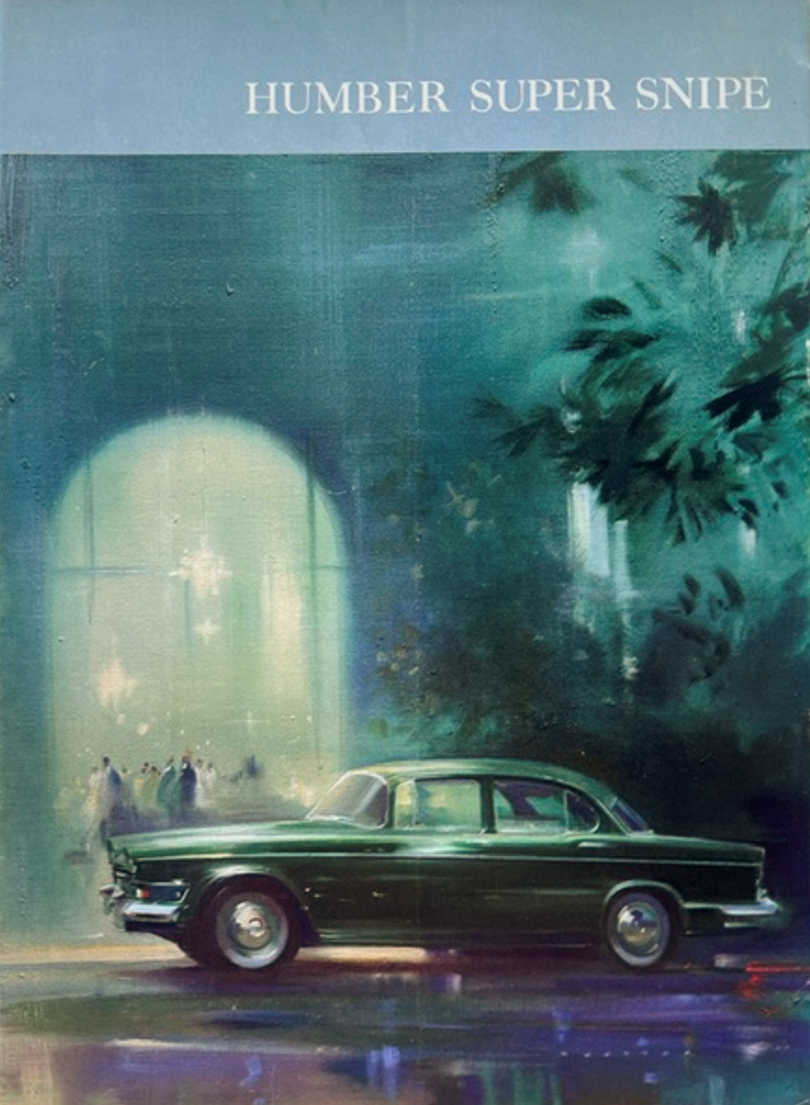
Humber Super Snipe
folded brochure, 24 pages, English
published 05-63
Dating
publicity code 4/53/8
1966
Humber Super Snipe
brochure, 12 pages, English
published 11-66
Dating
publicity code 1/116/5
Maak jouw eigen website met JouwWeb