Ferrari
250
1952-1964
The Ferrari 250 is a series of sports cars and grand tourers built from 1952 to 1964. The company's most successful early line, the 250 series includes many variants designed for road use or sports car racing. The cars are characterised by their use of a 2,953 cc V12 engine designed by Gioacchino Colombo. The 250 series designation refers to this engine's single cylinder displacement of approximately 250 cc. The engine was notable for its light weight and impressive output of up to 296 hp in the Testa Rossa and GTO. The V12 weighed hundreds of pounds less than its chief competitors. Typical of Ferrari, the V12 made its debut on the race track, with the racing 250s preceding the street cars by three years. Numerous variants have been built, including the 250 GT Berlinetta, introduced at the 1956 Geneva Motor Show. Construction was handled by Carrozzeria Scaglietti based on a Pinin Farina design. Another notable variant was the 250 Le Mans, introduced at the November 1963 Paris Auto Show. It was developed as a coupé version of the earlier 250 P and was a new production car intended to meet FIA homologation requirements for the Group 3 GT class. However, Ferrari only built 32 units, nowhere near the 100 units required to homologate the car. As a result, Ferrari had to withdraw from factory participation in the GT class of the 1965 World Sportscar Championship.
1956
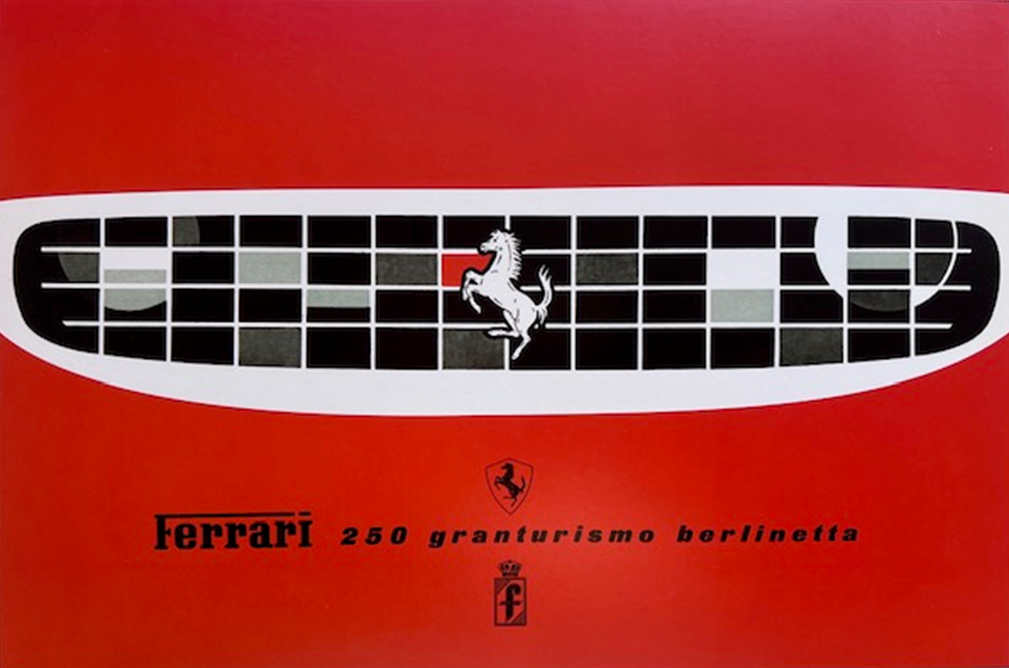
Ferrari 250 GT Berlinetta
folder, 4 pages, Italian
published c1956
Dating
the 250 GT Berlinetta was introduced in 1956
1963
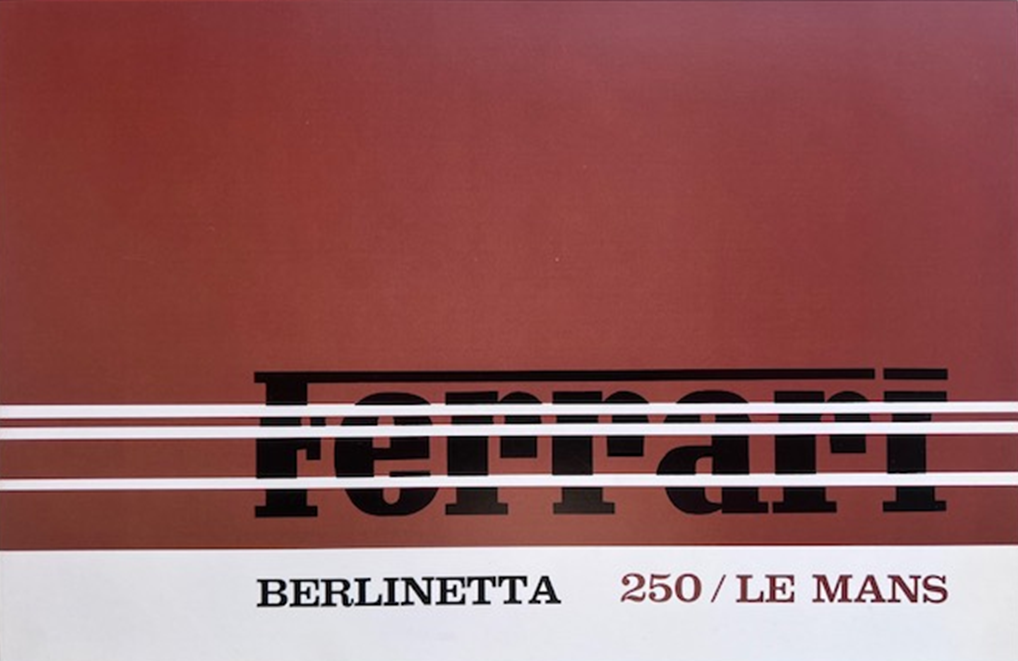
Ferrari 250 Berlinetta Le Mans
folder, 4 pages, Italian, English, French
published c1963
Dating
the 250 Berlinetta Le Mans was introduced in 1963
Maak jouw eigen website met JouwWeb