Volvo
P 1800, 1800 S
1960-1973
In 1957 Volvo started a project to create a sports car, despite the fact that their previous attempt, the P1900, had failed to take off with only 68 cars sold. Design work was done by Pelle Petterson under the tutelage of Italian auto stylist Pietro Frua at the prestigious carrozzeria Ghia. Volvo hoped to outsource production at Karmann in Osnabrück, but Karmann's most important customer Volkswagen, forbade the company to take on the job. They feared that the P1800 would compete with the sales of their own Karmann Ghia and threatened to cancel all their contracts with Karmann if they took on this car. Volvo then turned to Jensen Motors, whose production lines were under-utilised, and they agreed on a contract for 10,000 cars. The Linwood body plant of manufacturer Pressed Steel was in turn sub-contracted by Jensen to create the unibody shells, which were then taken by rail to be assembled at Jensen in West Bromwich, England. In September 1960, the first production P1800 left Jensen.
1960

Volvo P 1800
sheet, Dutch
published 01-60
Dating
publicity code UR 6839/2 1.60 10.000
1961

Volvo P 1800
sheet, Dutch
published 01-61
Dating
publicity code RK 109 1.61 15000
1962
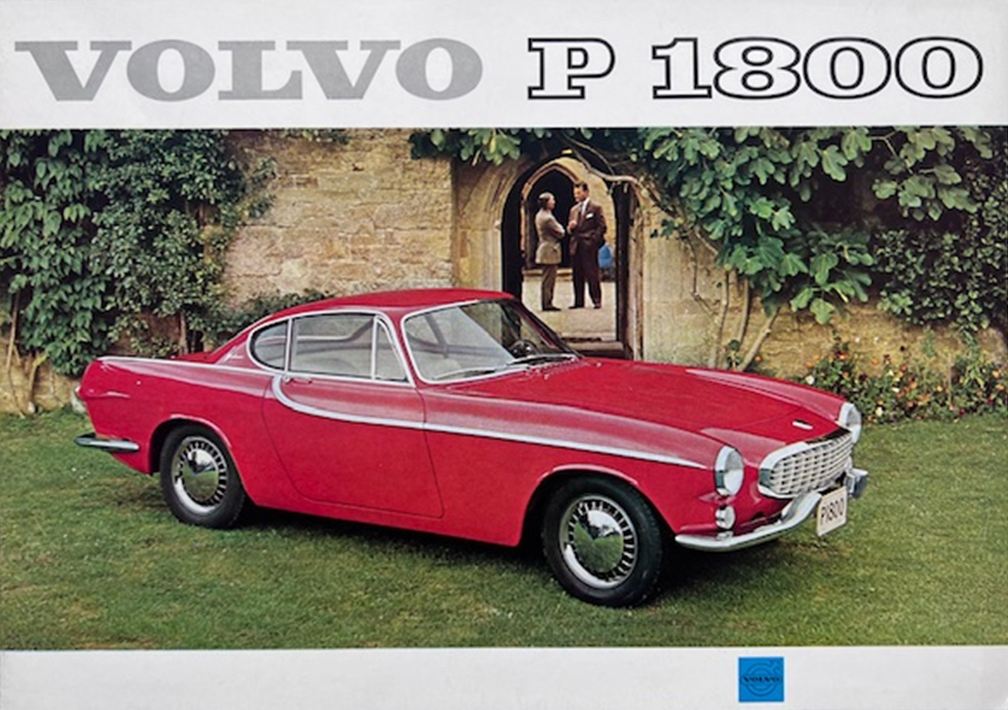
Volvo P 1800
brochure, 16 pages, Dutch
published 03-62
Dating
publicity code RK676.3.62.2000

Volvo P 1800
sheet, Dutch
published 11-62
Dating
publicity code RK 646/3 11.62 10000
Since Volvo was not satisfied with the quality delivered by the Jensen factory, the contract was ended early after 6,000 cars had been built. In 1963 production moved to Volvo's Lundby Plant in Gothenburg and the car's name was changed to 1800 S. For 1970 numerous changes came with the fuel-injected 1800 E, which had the B20E engine with Bosch D-Jetronic fuel injection and a revised camshaft. In addition, it was the first 1800 with four-wheel disc brakes.
1963
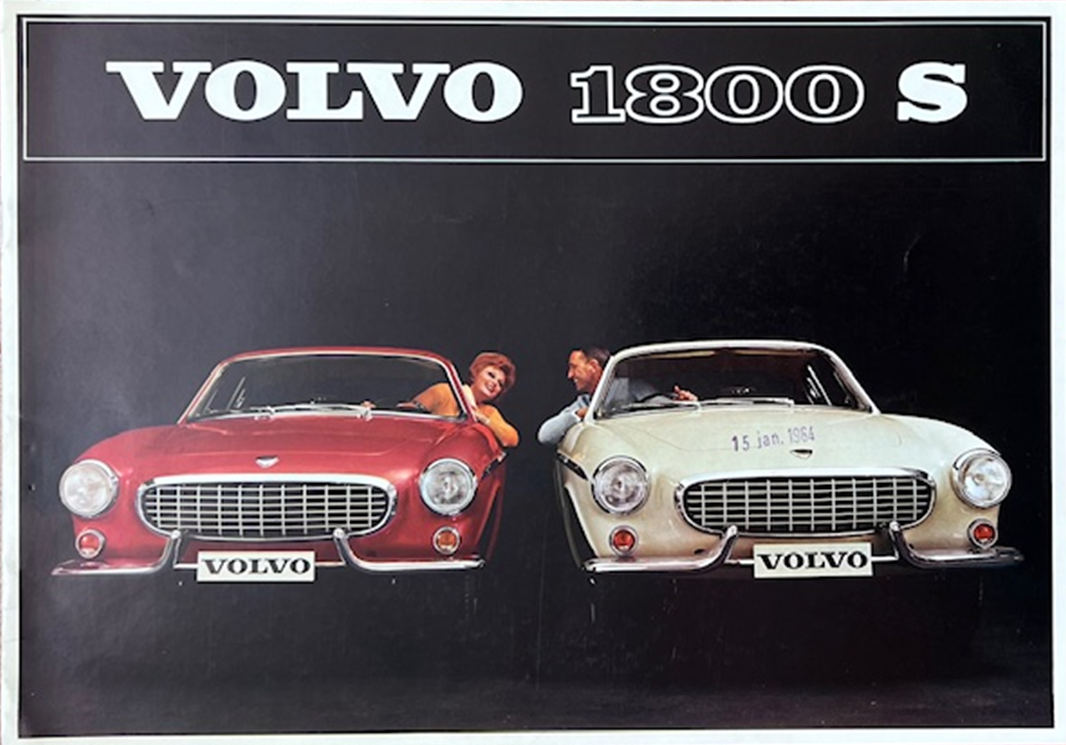
Volvo 1800 S
brochure, 12 pages, Dutch
published 09-63
Dating
publicity code RK 1136 2000 9.63
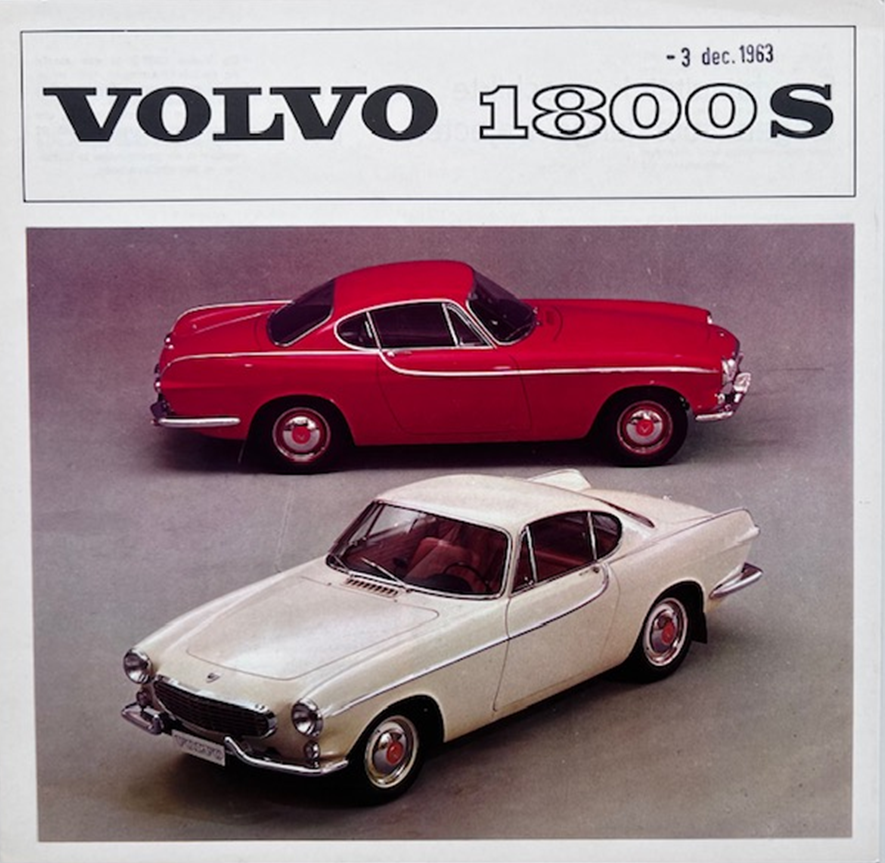
Volvo 1800 S
folder, 4 pages, Dutch
published 09-63
Dating
publicity code RK 1164 9.63 2.000
1964

Volvo 1800 S
brochure, 12 pages, Dutch
published 09-64
Dating
publicity code RK 1495 9.64 5.000
1965

Volvo 1800 S
folder, 4 pages, Dutch
published 08-65
Dating
publicity code RK 1757 8.65 15.000
1967

Volvo 1800 S
brochure, 12 pages, Dutch
published 01-67
Dating
publicity code RK 2274/2 1.67 5.000
1969

Volvo 1800 S
brochure, 12 pages, Dutch
published 01-69
Dating
brochure code RK 3402/2 1.69 5.000
1970

Volvo 1800 E
brochure, 12 pages, Dutch
published 08-70
Dating
brochure code RSP 50091 8.70
Volvo introduced its final P 1800 variant, the 1800 ES, in 1972 as a two-door shooting brake with a frameless, all-glass tailgate. The final design was chosen after two prototypes had been built by Sergio Coggiola and Pietro Frua. Both Italian prototypes were considered too futuristic and instead, in-house designer Jan Wilsgaard's proposal was accepted. Only 8,077 units of the ES were built in its two model years. Nevertheless, the design proved to be very popular with future Volvo-designers. It was a major influence on the Volvo 480, on multiple concept cars and on the Volvo C30.
1971

Volvo 1800 ES
brochure, 18 pages, Dutch
published 1971
Dating
brochure code RSP/PV 43-71 (5640-10)
Maak jouw eigen website met JouwWeb