MG
MGB
1962-1980
Introduced in 1962, the MGB represented a major step forward for MG, combining modern construction with familiar mechanical components. Unlike its predecessors, it featured a unitary body structure rather than a separate chassis, improving rigidity while reducing weight and production costs. Power came from the proven B-Series engine, enlarged to 1,798 cc, delivering solid performance and reliability. The MGB offered improved space efficiency despite its more compact dimensions, along with a more comfortable ride thanks to revised suspension. Front disc brakes were standard, paired with rear drums. In 1965 the range expanded with the MGB GT, a stylish fixed-roof model designed by Pininfarina, introducing a practical hatchback-style layout.
1962

MGB
brochure, 16 pages, Dutch
published 06-62
Dating
publicity code 26/57 (13122) 6/62 90m
1965

MGB GT
folder, 8 pages, French, Dutch (Belgium)
published c1965
Dating
Introduced for the 1968 model year, the MGB Mk II brought a series of mechanical and safety updates rather than a complete redesign. The most important change was a new gearbox with revised ratios and full synchromesh on all four gears, while a Borg-Warner automatic transmission became optional in some markets. To meet US safety regulations, the MGB received a padded dashboard and dual-circuit brakes, while other markets retained the traditional metal fascia. Further updates followed, including revised grilles and improved interiors.
1969

MGB, MGB GT
brochure, 8 pages, English
published 12-69
Dating
publicity code
26/11 (28329) 12/69 - 25m
1970

MGB GT
brochure, 8 pages, Dutch
published c1970
Dating
the English version of this brochure has publication code 2725
1972

MGB
brochure, 16 pages, Dutch
published c1972
Dating
de Engelse versie van deze brochure heeft code 2961
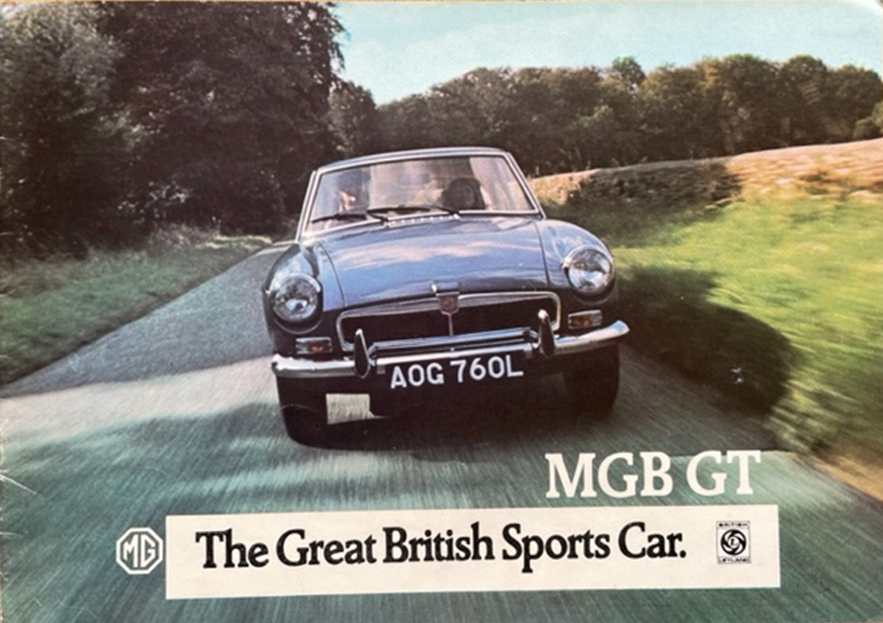
MGB GT
brochure, 16 pages, Dutch
published c1972
Dating
the English version of this brochure has publication code 2962
In 1974 the MGB underwent its most controversial transformation, driven largely by new US safety regulations. Early in the year, chrome bumper overriders were replaced by large rubber blocks, before being superseded later in 1974 by fully integrated black rubber bumpers. These heavier, steel-reinforced units altered the car’s appearance significantly, especially at the front where the grille was incorporated into the bumper. To meet headlight height regulations, the suspension was raised, which negatively affected handling. Subsequent revisions in 1977 improved the suspension, but the changes marked a shift away from the MGB’s original character. Production ultimately ended in 1980 without a direct successor.
1974

MG MGB
brochure, 12 pages, English
published 10-74
Dating
publicity code 26/8 (87685) 10/74
Maak jouw eigen website met JouwWeb