Porsche
901, 911, 912
1963-1989
At the September 1963 Internationale Automobil-Ausstellung in Frankfurt a prototype of the Porsche 901 was shown to the public. It was developed as a much more powerful, larger, more comfortable replacement for the Porsche 356. Initially, the car was designated as the Porsche 901, after its internal project number. However, Peugeot protested on the grounds that it had exclusive rights to car names formed by three numbers with a zero in the middle. Eventually, Porsche changed the name to 911 before the start of production in September 1964.
1963

Porsche 901
folder, 8 pages, German
published 08-63 (reprint 1993)
Dating
August 1963 and reprint 1993 are printed inside
The 911 would become a legendary sports car with its rear-mounted, air-cooled 1,991 cc flat-6 boxer engine. When 356 production came to an end in 1965, there was still a market for a less expensive 4-cylinder car. The Porsche 912, a slightly downscaled 911 fitted with the 356's 1,582 cc engine, was introduced the same year as its replacement. In 1967, Porsche introduced the more powerful 911S. The first targa version, with a stainless steel-clad roll bar, appeared later that year.
1964

Porsche 911
brochure, 12 pages, German
published 10-64
Dating
Okt 64 is printed on the back
1965

Porsche 912
brochure, 8 pages, German
published 04-65
Dating
4.65 is printed on the back

Porsche 912
folder, 6 pages, German, English, French
published 08-65
Dating
8.65 is printed on the back
1968

Porsche 911
brochure, 20 pages, German
published 08-68
Dating
August 1968 is printed on the back
In 1969, the engine was increased to 2,195 cc and the wheelbase was lengthened to remedy the car's nervous handling. The 912 was discontinued, with the 914 taking its place as Porsche's entry model. Fuel injection arrived both for the 911S and the new 911E and a semi-automatic Sportomatic was added to the product lineup. Late 1971 the engine was enlarged again to 2,341 cc.
1969

Porsche 911
brochure, 26 pages, German
published 10-69
Dating
publicity code W3 . 65. 1069. 0704
1971

Porsche 911
folder, 4 pages, English
published 09-71
Dating
publicity code W46 e 020 971 0704
1972

Porsche 911
folder, 4 pages, English
published c1972
Dating
the car has the 2,341 cc engine, but not yet the 1973 new bumpers
publicity code 1004.23
In 1973 the Carrera RS was introduced to meet homologation demands. It had a 2,687 cc boxer-6 engine, revised and stiffened suspension, a "ducktail" rear spoiler, larger brakes, wider rear wheels and rear wings. Later that year saw the introduction of impact bumpers to conform with low speed protection requirements of U.S. law. In 1974 the first production turbocharged 911 was introduced. The body shape is distinctive, thanks to wide wheel-arches to accommodate the wide tires, and a large rear spoiler. It was fitted with a 260hp 2,993 cc engine and was known for its exhilarating acceleration coupled with challenging handling characteristics and extreme turbo lag. With a top speed of 250 km/h it was the fastest production car of its time.
1973

Porsche 911
folder, 4 pages, German
published c1973
Dating
the car features the 2,687 cc engine introduced in 1973, but the 1974 911 turbo is not mentioned
publicity code 1033.10

Porsche 911
brochure, 34 pages, German
published c1973
Dating
the car features the 2,687 cc engine introduced in 1973, but the 1974 911 turbo is not mentioned
publicity code 1035.10
1974

Porsche 911
folder, 4 pages, German
published c1974
Dating
the car features the 2,687 cc engine introduced in 1973, but the 1974 911 turbo is not mentioned
publicity code 1053.10
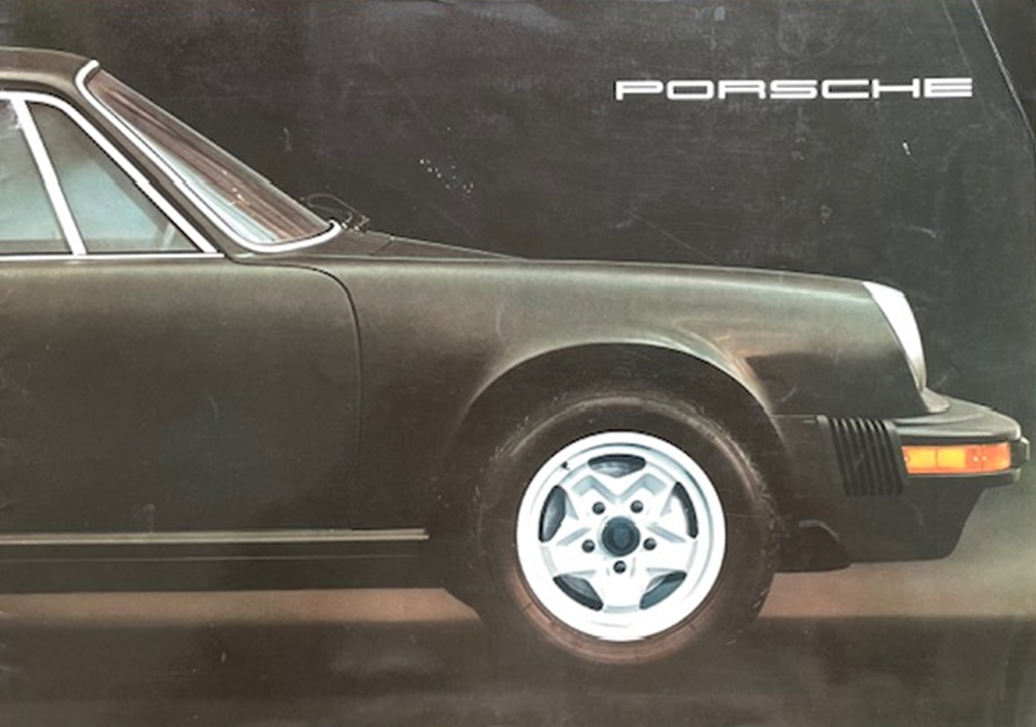
Porsche 911
brochure, 36+6 pages, English (USA)
published c1974
Dating
on page 34 model year 1975 is mentioned
publicity code 1055.21

Porsche 911 Turbo
brochure, 12 pages, German, English, French, Italian
published c1974
Dating
the 911 Turbo was introduced in 1974
publicity code 1061.14
1975

Porsche 911
folder, 6 pages, German
published c1975
Dating
as of 1975 the Carrera has a 2,993cc engine, in 1977 the engine of the 911 turbo is enlarged to 3,299cc
1976

Porsche 911
folder, 4 pages, German
published c1976
Dating
as of 1975 the Carrera has a 2,993cc engine, in 1977 the engine of the 911 turbo is enlarged to 3,299cc
publicity code 1083.10

Porsche 911
brochure, 36+6 pages, German
published c1976
Dating
the brochure includes an appendix called "Die technischen Daten 1976"
publicity code 1084.10
1977
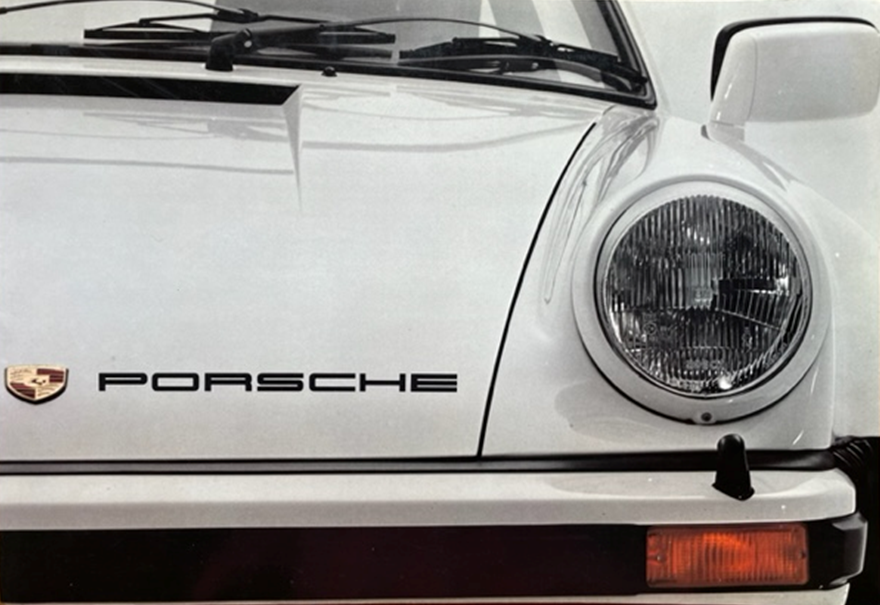
Porsche 911
brochure, 36+6 pages, German
published 1977
Dating
the brochure includes an appendix called "Die technischen Daten 1977"
publicity code 1124.10
1978
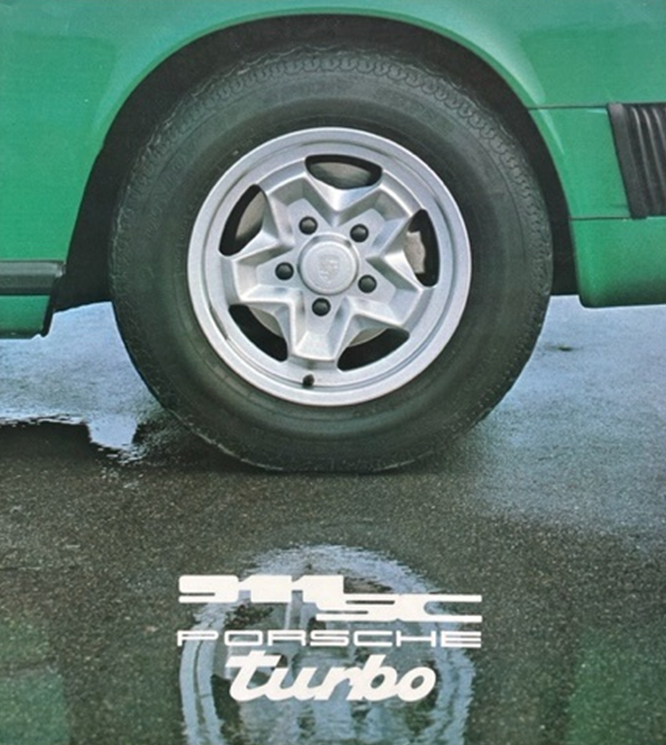
Porsche 911
brochure, 36+6 pages, German
published c1978
Dating
the brochure includes an appendix called "Die technischen Daten 1978"
publicity code 1155.10
Maak jouw eigen website met JouwWeb