Ford
Taunus 12M, 15M
1952-1970
When the Ford Taunus P1 was introduced in 1952, it stood out as a remarkably modern car. With its streamlined ponton-style body, it contrasted sharply with the offerings from Opel, Volkswagen, and Auto Union, which were still largely based on pre-war designs from the 1930s. The design was inspired by American styling trends and took cues from the Studebaker Champion. While the Studebaker featured a rounded nose with a propeller-like motif, the Taunus carried a globe emblem at the front, a detail that earned it the nickname Weltkugel. The M in its name stood for Meisterstück, reflecting Ford's ambition to position the car as a technical and design showcase. The P1 remained in production for a decade before being succeeded by the Ford Taunus P4 in 1962.
1952

Ford Taunus 12M
brochure, 20 pages, Dutch
published 07-52
Dating
publicity code H.1952-7-10.000
1954

Ford Taunus 12M
brochure, 8 pages, German
published 05-54
Dating
publicity code V/54
1955

Ford Taunus 12M
brochure, 8 pages, Dutch
published 1955
Dating
brochure code H55 D8 30.000
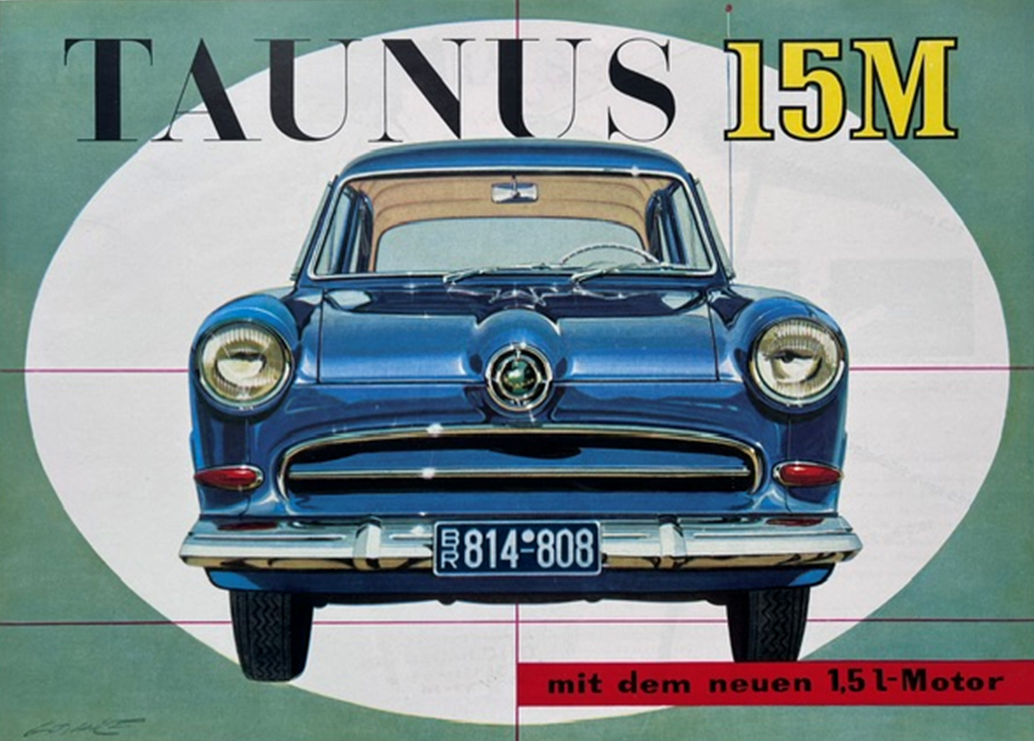
Ford Taunus 15M
brochure, 8 pages, German
published c1955
Dating
the 1,498 cc engine was introduced in 1955 and is presented ad new
publicity code FP 55253
1957

Ford Taunus 15M
brochure, 8 pages, Dutch
published 1957
Dating
folder code H57 - D12A3 - 9200

Ford Taunus 12M, 15M
folder, 12 pages, Dutch
published 1957
Dating
folder code H57 D20 24M
1958

Ford Taunus 15M
brochure, 8 pages, Dutch
published 1958
Dating
brochure code H58 D22 16.000
1959

Ford Taunus 12M
brochure, 8 pages, Dutch
published 1959
Dating
brochure code H59 D21A1 6.000

Ford Taunus 12M combi
folder, 4 pages, Dutch
published 1959
Dating
publicity code H59 - D35 - 5000
In 1959, Ford management decided to discontinue the 15M, as it could no longer compete with more modern rivals like the Opel Olympia Rekord. This allowed the smaller 12M to focus on competing with cars such as the Volkswagen Beetle and the latest generation of Fiats and Peugeots. In this segment, competition was mainly based on price, since the 12M was already showing its age, with engineering roots dating back to the 1930s. The distinctive Weltkugel design was dropped, and the new model featured bold side striping, earning it the nickname Seitenstreifen-Taunus.
1959

Ford Taunus 12M
brochure, 10 pages, Dutch
published 1959
Dating
publicity code H59 D37A1 - 8000
1960

Ford Taunus 12M
folder, 8 pages, Dutch
published 09-60
Dating
publicity code H 60/9-D 46 AI-20.000
1961

Ford Taunus 12M
folder, 6 pages, Dutch
published 05-61
Dating
publicity code H 61/5 - D66 - 7500

Ford Taunus 12M
brochure, 12 pages, Dutch
published 09-61
Dating
publicity code H 61/9 - D69 - 15.000
The Ford Taunus P4 was introduced in 1962 as the successor to the Taunus 12M (P1). It was notable for being the first German Ford with front-wheel drive. The car featured a compact V4 engine, an unusual choice that made the engine short and space-efficient. With its rounded, modern styling and improved interior comfort, the P4 was positioned as a practical family car for the growing West German middle class. It was available in various body styles, including two- and four-door sedans and a station wagon. Though technically innovative for its time, the P4 faced criticism for its handling and build quality. It remained in production until 1966, when it was replaced by the more angular and refined Taunus P6.
1962

Ford Taunus 12M
folder, 6 pages, Dutch
published c1962
Dating
the car has drum brakes; in 1964 they were replaced by disc brakes
1963
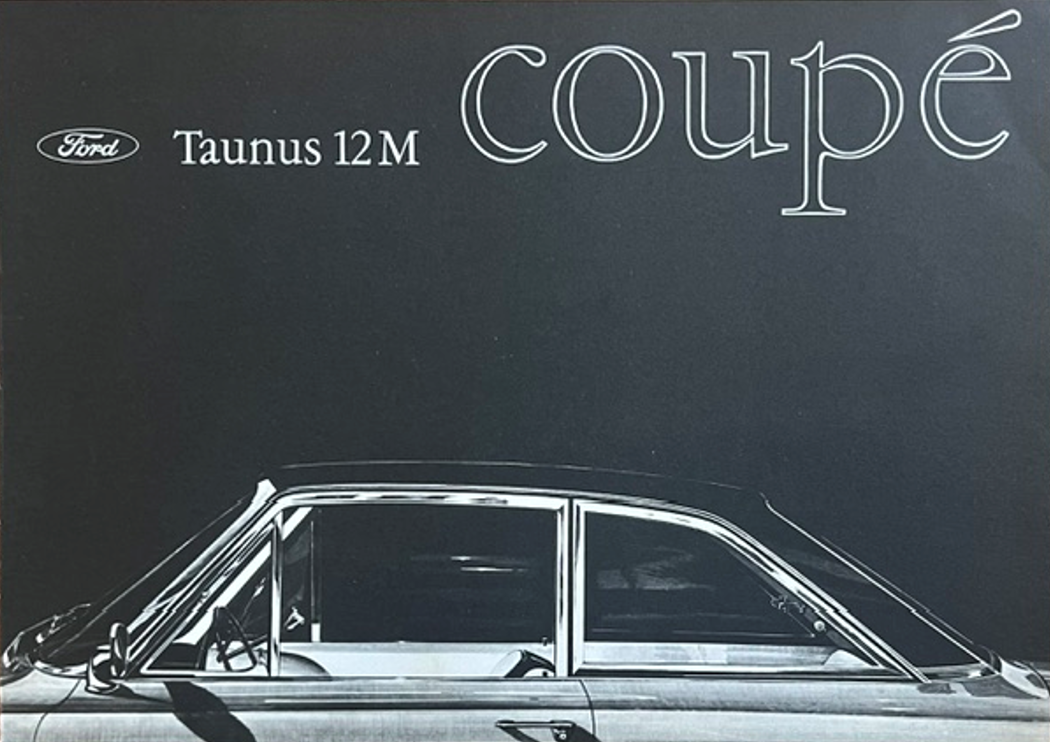
Ford Taunus 12M coupé
folder, 4 pages, German
published c1963
Dating
the 12M coupé was introduced in August 1963; in the folder it is presented as new

Ford Taunus 12M
folder, 6 pages, Dutch
published 11-63
Dating
publicity code
H 63/11 - D 83A3 - 10.000
1964

Ford Taunus 12M
folder, 6 pages, Dutch
published 01-64
Dating
publicity code H 64/1-D 109-10.000

Ford Taunus 12M
folder, 6 pages, Dutch
published 01-64
Dating
publicity code H 64/1 - D 109 - 10.000

Ford Taunus 12M TS
folder, 8 pages, Dutch
published 03-64
Dating
publicity code H64/3-D124-10.000

Ford Taunus 12M
folder, 4 pages, German
published c1964
Dating
late 1964 the car received front disc brakes as mentioned in the folder
publicity code 4720021
1965

Ford Taunus 12M
brochure, 16 pages, Dutch
published 03-65
Dating
publicity code H 65/3-2-15.000
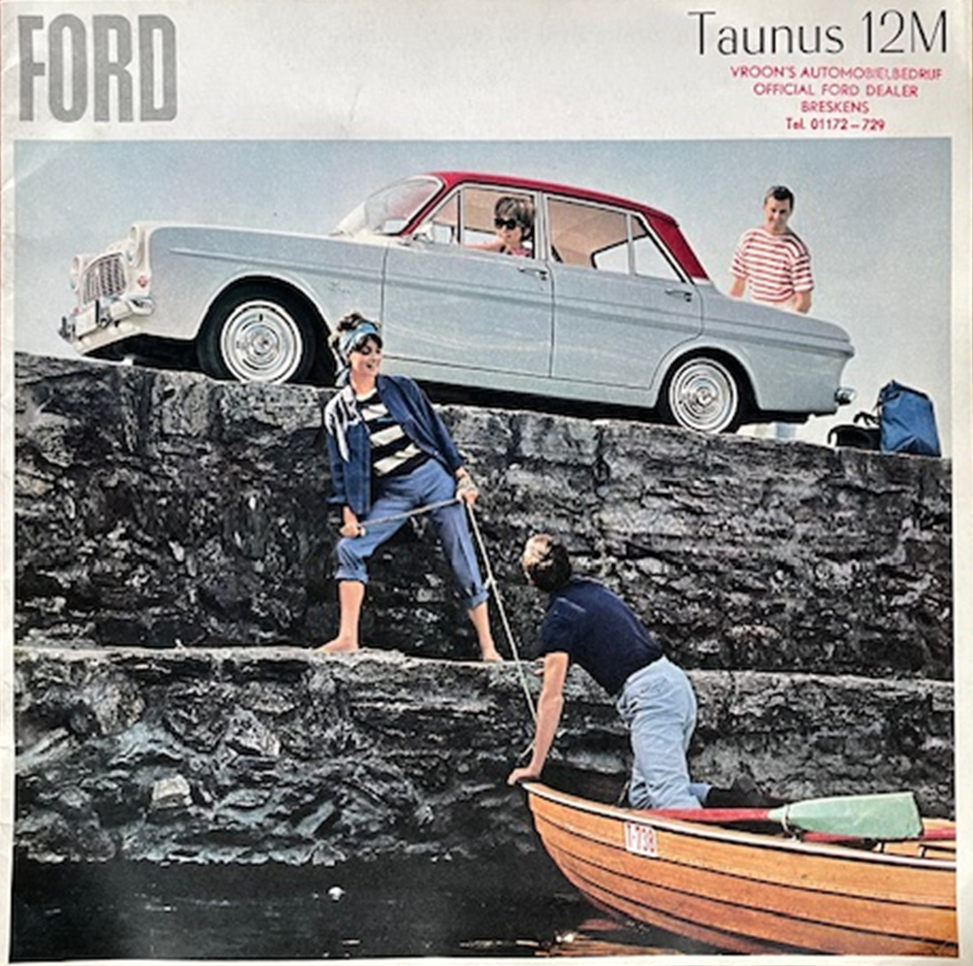
Ford Taunus 12M
brochure, 20 pages, Dutch
published 04-65
Dating
publicity code H 65/4-1-40.000
When the Ford Taunus P6 debuted in 1966, it marked a sharp stylistic departure from its predecessor. With its clean lines, wide stance, and distinctive trapezoidal grille, the P6 embraced a modern, European look aimed at a younger audience. Available as a two- or four-door sedan and a coupé, it also introduced a new V4 engine, offering improved refinement and space efficiency. The car balanced American flair with German practicality, helping Ford strengthen its position in the competitive mid-size segment. The P6 remained in production until 1970, paving the way for the even more ambitious Taunus TC series.
1966

Ford Taunus 12M
brochure, 12 pages, Dutch
published 10-66
Dating
publicity code H66/10-1-20.000
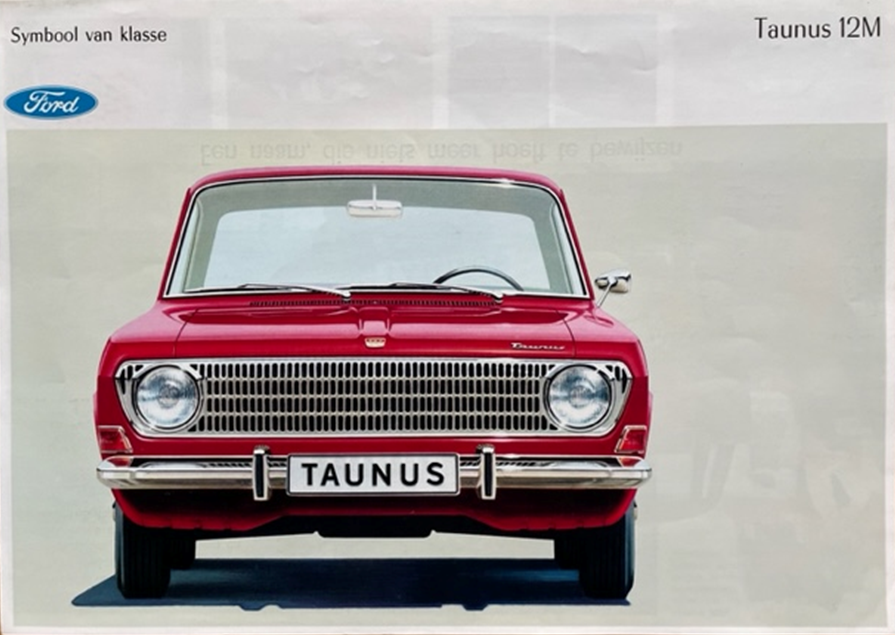
Ford Taunus 12M
folder, 4 pages, Dutch
published 10-66
Dating
publicity code H66/10-2-125.000

Ford Taunus 15M
brochure, 12 pages, Dutch
published 10-66
Dating
publicity code H66/10-1-20.000

Ford Taunus 15M
folder, 4 pages, Dutch
published 10-66
Dating
publicity code H66/10-2-125.000
1967

Ford 12M, 15M
folder, 4 pages, Dutch
published c1967
Dating
the car features the August 1967 facelift and the Taunus name is removed; in the folder the car is presented as new
1968

Ford 12M
brochure, 16 pages, Dutch
published c1968
Dating
publicity code 981 01 12 NED

Ford 12M
folder, 16 pages, Dutch
published c1968
Dating
publicity code 991 01 12 NED
1969

Ford 15M
brochure, 16 pages, Dutch
published c1969
Dating
publicity code 981 02 12
1970

Ford 12M
brochure, 16 pages, Dutch
published c1970
Dating
publicity code 981 03 12 NED

Ford 12M
folder, 16 pages, Dutch
published c1970
Dating
publicity code 991 03 12 NED
Maak jouw eigen website met JouwWeb