Renault
30, 20
1975-1983
The Renault 30 TS debuted at the Geneva Motor Show in March 1975 and marked a significant milestone as Renault’s first six-cylinder model since the pre-war era. It was powered by the new 2,664 cc V6 engine, jointly developed by Peugeot, Renault and Volvo. Eight months later, at the Paris Salon in November 1975, the Renault 20 was introduced. Essentially a larger successor to the Renault 16, it shared the same practical hatchback layout but was initially powered by a 1,647 cc four-cylinder engine derived from the Renault 16 TX. In November 1979, the R20 gained a 2,068 cc diesel engine, becoming Renault’s first production diesel passenger car. Although virtually identical in bodywork and general engineering, the two models were positioned differently: the Renault 30 served as the flagship with a larger engine and higher equipment levels, while the Renault 20 offered a more accessible alternative. They were easily distinguished by their front-end treatment, the R20 featuring two rectangular headlights and the R30 four round units. Despite their innovation and spaciousness, the Renault 20 and 30 struggled outside France, where hatchback bodywork and modest engine options limited their appeal in more conservative executive markets. As a result, more than 63 percent of total production - over 622,000 R20s and 145,000 R30s - was sold domestically. Production ended in October 1983, when both models were replaced by the Renault 25.
1975

Renault 30 TS
brochure, 26 pages, Dutch
published c1975
Dating
brochure code 25.107.11

Renault 20
brochure, 16 pages, Dutch
published c1975
Dating
brochure code 25.134.11
1977
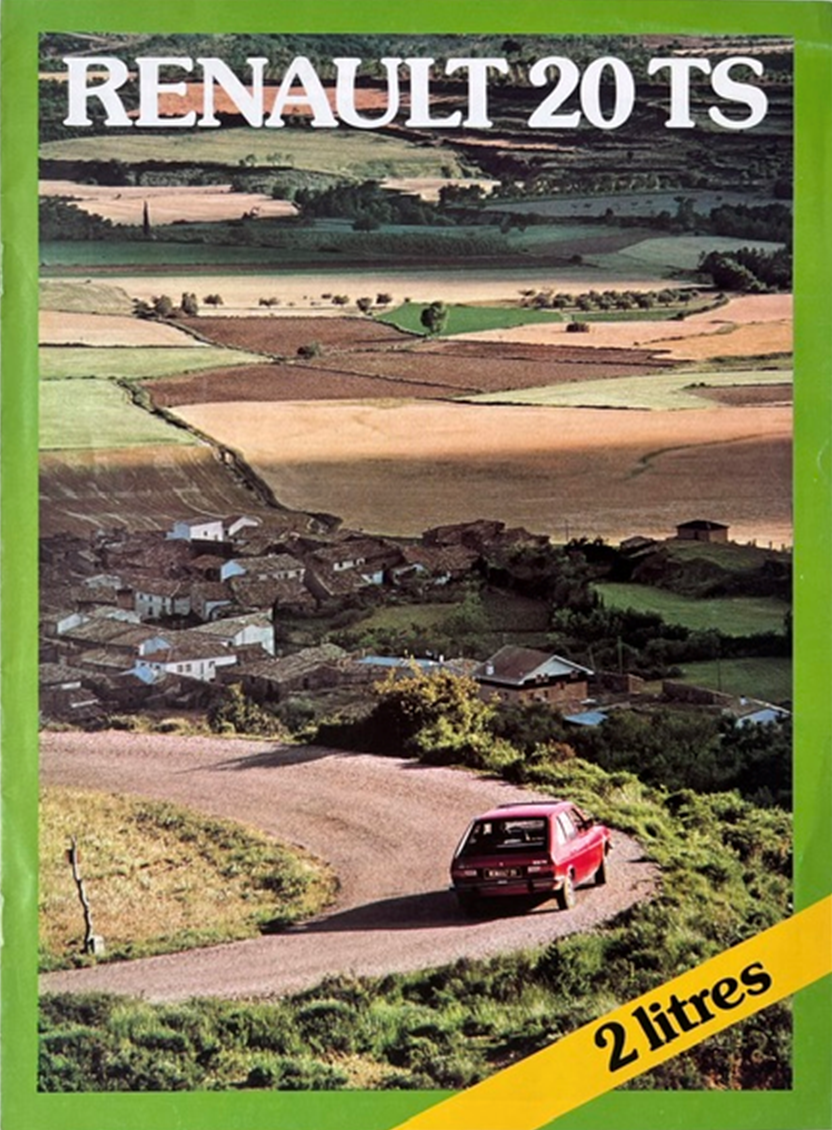
Renault 20 TS
brochure, 8 pages, Dutch
published c1977
Dating
publicity code 27 135 11

Renault 20, 30
brochure, 20 pages, Dutch
published c1977
Dating
de 20 TS (introduced July 1977) is mentioned, but not the 30 TX (introduced October 1978)
1978

Renault 30
brochure, 32 pages, Dutch
published c1978
Dating
1978 is mentioned on page 3; the October 1978 30 TX is not included

Renault 30 TX
brochure, 12 pages, Dutch
published c1978
Dating
brochure code 28.125.11
1979

Renault 20
brochure, 36 pages, Dutch
published c1979
Dating
brochure code 29.114.11

Renault 30
brochure, 36 pages, Dutch
published c1979
Dating
brochure code 29.115.11

Renault 20 diesel
folder, 6 pages, Dutch
published c1979
Dating
folder code 29.118.11
Maak jouw eigen website met JouwWeb