DKW
Junior, F12, F11
1959-1965
The DKW Junior began life as the DKW 600 prototype with a two-cylinder two-stroke engine. It was unveiled in March 1957 at the Internationale Automobil Ausstellung in Frankfurt. By the time it entered production in 1959, in a newly built factory in Ingolstadt, it had been renamed Junior and upgraded with a 741 cc three-cylinder two-stroke engine.
1959

DKW Junior
brochure, 16 pages, Dutch
published c1959
Dating
the text presents it as a new model
1960

DKW Junior
folder, 8 pages, Dutch
published c1960
Dating
in 1961 the Junior de Luxe was introduced; it is not mentioned in the folder
1961

DKW Junior de luxe
folder, 6 pages, Dutch
published c1961
Dating
the de luxe was introduced in 1961 and is presented as a new model in the folder
In January 1963, the DKW Junior was succeeded by the F12, which closely resembled its predecessor in appearance but featured a larger 889 cc two-stroke three-cylinder engine. In August that same year, the F11 was introduced as a more affordable entry-level version, powered by a smaller 796 cc engine. The range was further expanded in 1964 with the addition of the F12 cabriolet. Production of the F11 and F12 was short-lived. After Volkswagen acquired Auto Union in 1965, the two-stroke models were quickly phased out. The Ingolstadt factory was soon repurposed to build the first models of the revived Audi brand.
1963
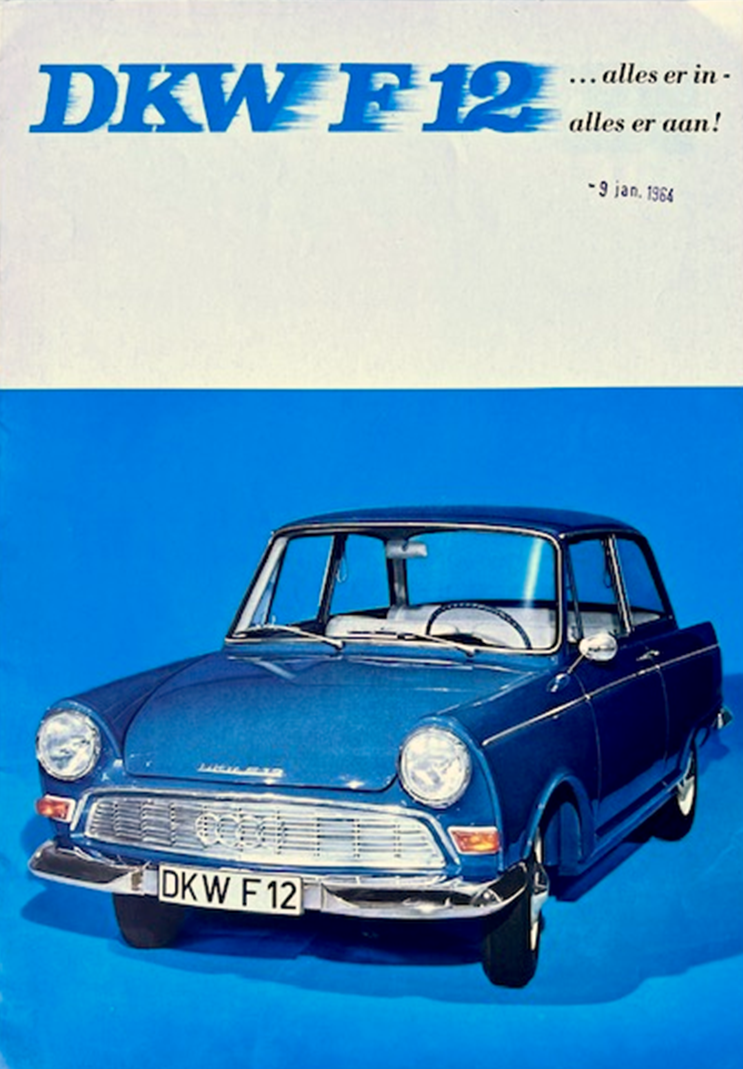
DKW F12
brochure, 16 pages, Dutch
published c1963
Dating
the 1964 cabriolet is not mentioned

DKW F12
folder, 8 pages, Dutch
published c1963
Dating
the 1964 cabriolet is not mentioned
publicity code WB 4946 (60-L-124)

DKW F11
folder, 4 pages, Dutch
published c1963
Dating
the text indicates this is an introduction to a new model
publicity code WB 5284 (70-G-126)
1964
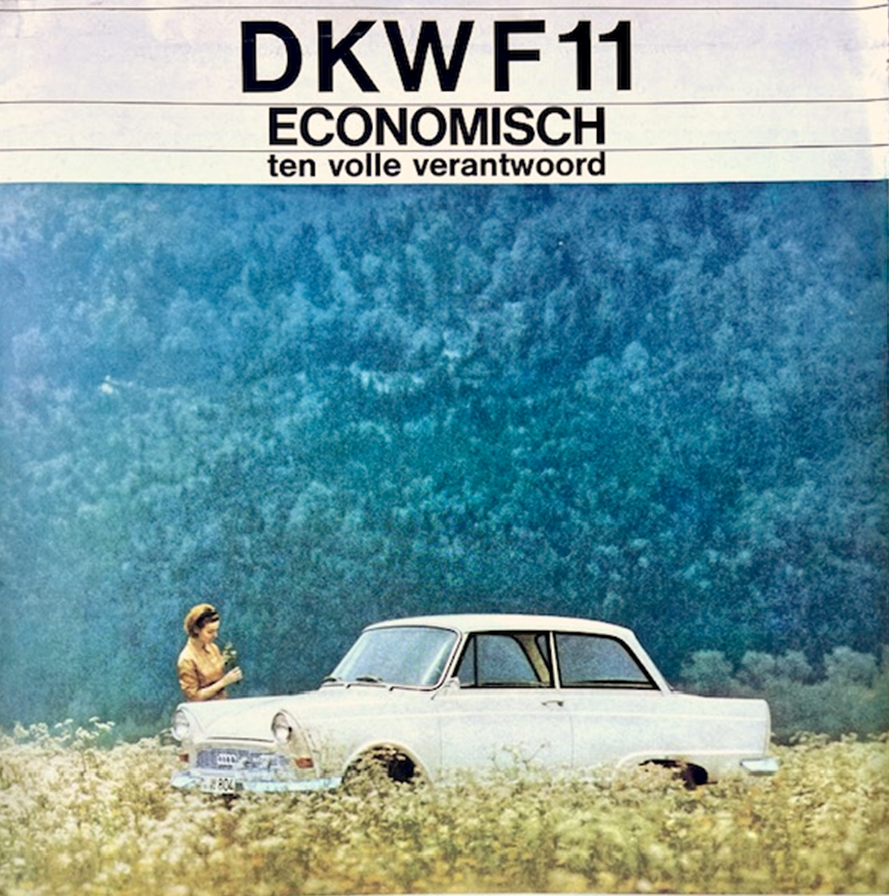
DKW F11
folder, 10 pages, Dutch
published c1964
Dating
publicity code WB 5338 (18-J-128)
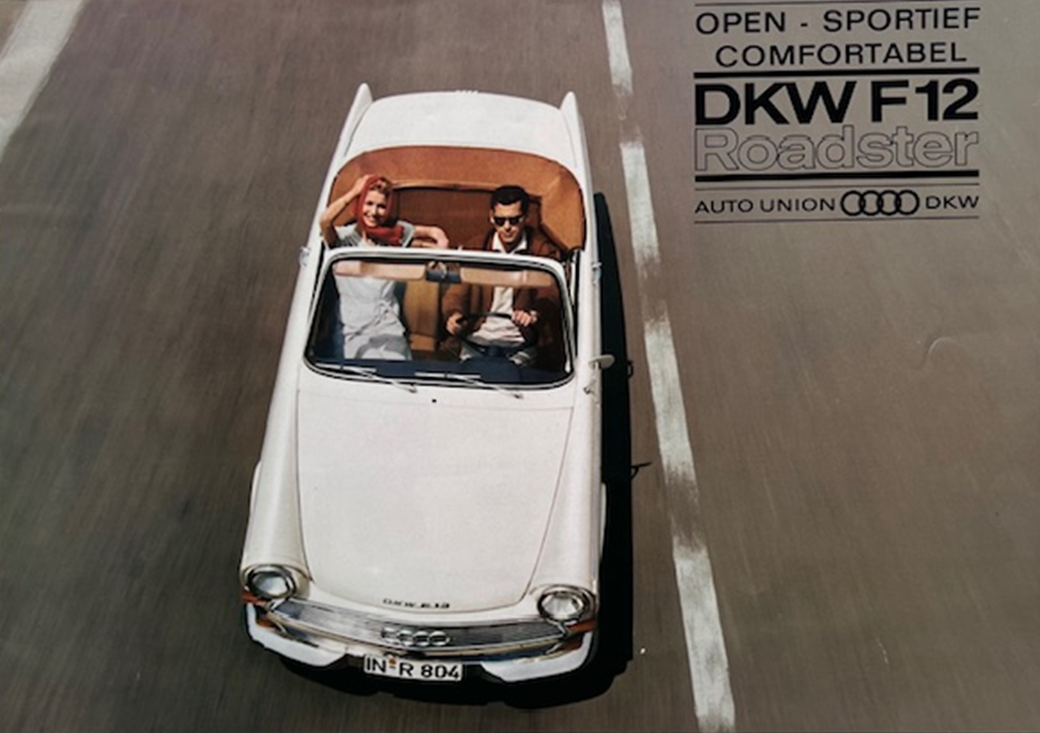
DKW F12 roadster
folder, 8 pages, Dutch
published 1964
Dating
the F12 roadster was produced in 1964 only
Maak jouw eigen website met JouwWeb